Dental Health Guide
White Spots on Teeth: Causes, Treatment & Prevention (Complete 2026 Guide)
Noticed chalky white patches on your smile? Here’s exactly why white spots on teeth appear, whether they’re permanent, and the safest ways to get rid of them.

If you’ve caught a glimpse of white spots on teeth in the mirror and wondered whether it’s a sign of trouble, you’re not imagining things — and you’re definitely not alone. White spots are one of the most common cosmetic dental concerns, affecting kids, teens, and adults alike.
The good news? Most white spots are harmless and very treatable once you know what’s actually causing them. This guide breaks down every major cause — from fluorosis to braces to early tooth decay — and walks through the treatments dentists actually recommend, plus simple habits that stop new spots from forming.
Quick answer: White spots on teeth are usually caused by uneven mineral loss (demineralization) in the enamel. Common triggers include dental fluorosis, plaque buildup around braces, early-stage tooth decay, and enamel that didn’t form correctly (enamel hypoplasia). Treatment ranges from remineralizing toothpaste to micro-abrasion, resin infiltration, or veneers, depending on severity.
What Are White Spots on Teeth?
White spots on teeth are areas of enamel that appear lighter, chalkier, or more opaque than the rest of the tooth. They happen when a section of enamel loses minerals faster than the surrounding tooth structure — a process dentists call demineralization. Because that patch of enamel is now more porous, it scatters light differently, which is why it looks white instead of blending in with the natural tooth shade.
They’re not always a sign of decay, but they can be an early warning sign of it — which is why identifying the cause matters more than just covering them up.
What Causes White Spots on Teeth?
There isn’t just one cause — white spots can develop while teeth are still forming under the gums, or later in life due to diet, hygiene, or orthodontic treatment. Here are the most common causes dentists see.
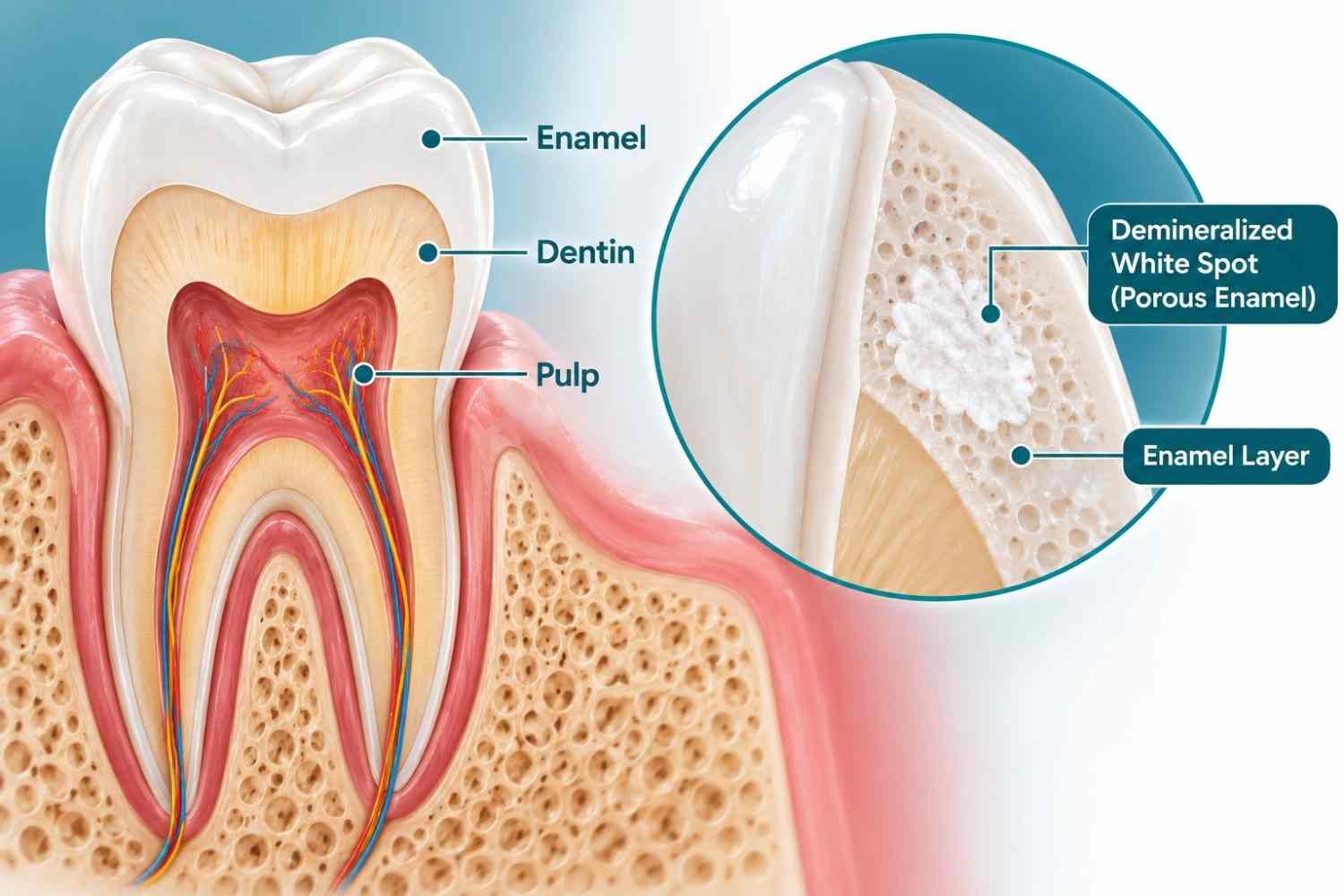
1. Dental Fluorosis
Fluorosis happens when a child gets too much fluoride while their adult teeth are still developing — usually from swallowing toothpaste, fluoride supplements, or naturally high-fluoride water between infancy and age 8. According to CDC survey data, roughly 1 in 4 Americans aged 6–49 has some degree of dental fluorosis, though most cases are very mild and barely noticeable. It typically appears as faint white streaks or blotches across several teeth rather than one isolated spot.
2. Enamel Hypoplasia
This is a developmental condition where the enamel didn’t form as thick or as evenly as it should have. It can be linked to premature birth, nutritional deficiencies (especially calcium and vitamin D), high fevers during infancy, or certain childhood illnesses. Because the enamel layer is thinner in these spots, they show up as noticeably whiter or even pitted patches.
3. Plaque Buildup and Early Tooth Decay
This is the most preventable cause. When plaque is left to sit on teeth — especially along the gumline — the bacteria produce acid that strips minerals from the enamel. The very first visible sign of a cavity is often a chalky white spot, long before any actual hole forms. Left untreated, that white spot can progress into a brown cavity.
4. Braces and Orthodontic Treatment
White spots on teeth after braces are extremely common. Brackets create extra nooks where plaque hides, and if brushing isn’t thorough around each bracket, demineralized “halos” form around where the brackets sat. These often become visible only after the braces come off.
5. Teeth Whitening Products
White spots on teeth after whitening strips or trays usually aren’t new — whitening often just makes existing fluorosis or demineralized spots more obvious, because the surrounding enamel gets brighter while the porous spot doesn’t absorb the whitening gel the same way. Overusing whitening products can also cause temporary dehydration spots that fade within a day or two.
6. Dry Mouth and Poor Saliva Flow
Saliva helps redeposit minerals back into enamel throughout the day. Chronic dry mouth — from certain medications, mouth breathing, or medical conditions — reduces this natural remineralization, making white spots more likely to form and less likely to resolve on their own.
| Cause | What It Looks Like | Most Common In | Reversible? |
|---|---|---|---|
| Fluorosis | Faint white streaks, multiple teeth | Children (developed during tooth formation) | Cosmetically, yes |
| Enamel hypoplasia | Thin, pitted or opaque patches | Children, linked to development | Cosmetically, yes |
| Early decay / plaque | Single chalky spot, often near gumline | All ages | Yes, if caught early |
| Braces / orthodontics | Square “halo” marks around bracket sites | Teens, orthodontic patients | Cosmetically, yes |
| Dry mouth | Widespread dullness, sticky feeling | Adults on certain medications | Often, with treatment |
Are White Spots on Teeth Permanent?
It depends on the cause. Very early demineralization (before the enamel surface breaks down) can sometimes be reversed with fluoride and remineralizing toothpaste. But once the enamel structure has actually changed — as with fluorosis or enamel hypoplasia — the spot itself won’t disappear on its own. It can, however, be made virtually invisible with cosmetic treatments like resin infiltration, microabrasion, or veneers.
Good to know: A white spot that appears suddenly and is soft or tender to the touch should be checked by a dentist promptly — this can signal active tooth decay rather than a cosmetic issue.
White Spots on Baby Teeth and in Children
Parents often notice white spots on a child’s front teeth shortly after they erupt. In babies, this can sometimes be linked to prolonged bottle or breastfeeding contact overnight (often called early childhood caries when it progresses), mild fluorosis from swallowing toothpaste, or enamel hypoplasia from illness during pregnancy or infancy.
A pediatric dentist can usually tell within one visit whether the spots are developmental (and just cosmetic) or an early sign of decay that needs a fluoride varnish or dietary changes. Either way, it’s worth getting checked rather than waiting — baby teeth cavities can spread quickly.
How to Get Rid of White Spots on Teeth
Treatment depends entirely on how deep the spot goes and what caused it. Here’s what actually works, from least to most invasive.
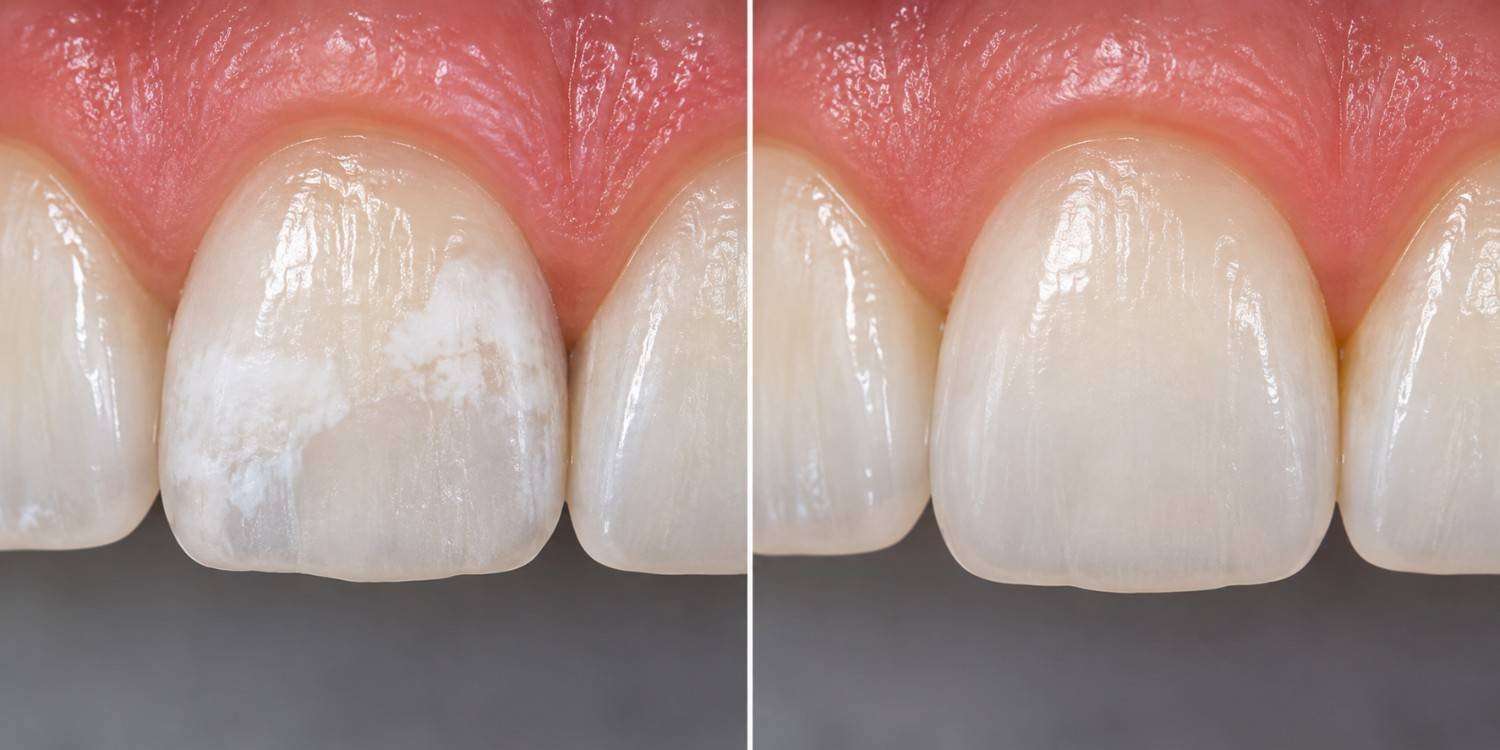
Professional Treatments
- Micro-abrasion: A dentist gently polishes away a very thin layer of enamel with a mild abrasive-acid compound, blending the spot into surrounding tooth color. Best for shallow, surface-level spots.
- Resin infiltration (ICON treatment): A resin is flowed into the porous enamel to fill it from the inside out, restoring a more even, translucent look. This is a popular, minimally invasive option for fluorosis and post-braces white spots.
- Professional teeth whitening: Can even out the color of the whole tooth so the spot blends in better — though it sometimes makes spots more noticeable first, so it’s best done under a dentist’s guidance.
- Dental bonding: A tooth-colored composite resin is applied directly over the spot. Affordable and fast, though it may need touch-ups over the years.
- Porcelain veneers: A thin custom shell is bonded over the front of the tooth. Best for more visible, stubborn spots or when several front teeth are affected. Longer-lasting but more expensive.
At-Home Care (for early, mild spots)
- Use a fluoride or hydroxyapatite remineralizing toothpaste consistently for several weeks.
- Cut back on sugary and acidic drinks that accelerate enamel demineralization.
- Brush twice daily with a soft-bristled brush, paying close attention to the gumline.
- Ask your dentist about a prescription-strength fluoride gel for stubborn early spots.
Tip: Skip DIY “natural remedies” like baking soda scrubs, lemon juice, or activated charcoal — these are acidic or abrasive and can actually wear down enamel further, making white spots look worse over time.
| Treatment | Best For | Typical Cost Range* | Longevity |
|---|---|---|---|
| Remineralizing toothpaste | Very early, mild demineralization | $10–$30 | Ongoing use |
| Micro-abrasion | Shallow surface spots | $150–$400 | Long-term |
| Resin infiltration (ICON) | Fluorosis, post-braces spots | $150–$600 | Several years+ |
| Dental bonding | Single visible spots | $100–$400 per tooth | 3–7 years |
| Porcelain veneers | Multiple/stubborn front-tooth spots | $900–$2,500 per tooth | 10–20 years |
*Costs vary by location and dentist; ask your provider for an accurate quote. If white spots bother you cosmetically and you’re weighing bonding versus veneers, our veneers vs. bonding comparison guide breaks down the pros and cons in detail.
White Spots After Braces or Whitening: What to Do
If you just had braces removed and noticed white spots, don’t panic — this is one of the most treatable types, since the enamel is usually only mildly demineralized rather than permanently altered. Resin infiltration and a few weeks of consistent fluoride toothpaste use are often enough to noticeably improve the appearance. Our guide on safe teeth whitening after orthodontic treatment covers timing and precautions in more detail.
If spots became more visible after using whitening strips, it’s usually because they were always there — the whitening just increased the contrast. A dentist can confirm whether it’s fluorosis, hypoplasia, or an early decay spot before recommending next steps.
How to Prevent White Spots on Teeth
- Supervise young children while brushing to avoid swallowing fluoride toothpaste (a pea-sized amount is enough after age 3).
- Brush thoroughly around orthodontic brackets, or consider an electric brush and interdental brushes during treatment.
- Limit frequent sipping of soda, juice, and sports drinks, which constantly bathe enamel in acid.
- Visit your dentist every six months for cleanings and early detection of demineralization.
- Ask about fluoride varnish treatments for children at higher risk of decay or fluorosis.
- Stay hydrated to support healthy saliva flow, which naturally helps remineralize enamel.
See a dentist promptly if: a white spot appears suddenly on one tooth, feels rough or soft, causes sensitivity to hot or cold, or seems to be growing. These can be signs of active decay that needs treatment before it becomes a cavity.
Frequently Asked Questions
What are white spots on teeth a sign of?
They’re usually a sign of localized mineral loss in the enamel. This can come from fluorosis, enamel that formed unevenly (hypoplasia), or early-stage tooth decay caused by plaque acid — so it’s worth having a dentist confirm which one applies to you.
Can you get rid of white spots on teeth completely?
Very early, mild spots can sometimes fade with remineralizing toothpaste and better oral hygiene. Deeper or developmental spots won’t disappear on their own but can be made virtually invisible with resin infiltration, bonding, or veneers.
How can I remove white spots on teeth naturally at home?
The safest “natural” approach is consistent oral hygiene combined with a fluoride or hydroxyapatite remineralizing toothpaste, reduced sugar and acid intake, and good hydration. Avoid abrasive DIY scrubs like baking soda or lemon juice, which can damage enamel further.
Why do I have white spots on my teeth after whitening strips?
Whitening strips brighten healthy enamel more evenly than porous, demineralized areas, which can make pre-existing white spots stand out more rather than causing new ones. A dentist can confirm the underlying cause and recommend a treatment to blend the color.
Are white spots on a child’s teeth something to worry about?
Not usually, but they should still be checked. Mild fluorosis or hypoplasia is typically cosmetic, while spots linked to prolonged bottle-feeding or poor hygiene can be an early sign of decay that’s easier to treat the sooner it’s caught.
Conclusion
White spots on teeth are common, and in most cases, they’re far more manageable than they look. Whether they trace back to fluorosis, braces, dry mouth, or early demineralization, the key is identifying the actual cause before choosing a fix. Mild spots often respond well to remineralizing toothpaste and better daily habits, while more visible or stubborn spots can be treated effectively with micro-abrasion, resin infiltration, bonding, or veneers.
The one step that matters most: get an actual diagnosis from a dentist rather than guessing. It’s the difference between a simple cosmetic fix and catching a cavity while it’s still easy to treat. If you’re exploring longer-term cosmetic options for stubborn spots, take a look at our guide to cosmetic dental restorations for a full comparison of what’s available.
Muhammad Naseem
SEO Strategist & Content Writer specializing in SEO, AI-driven content optimization, and digital marketing. Muhammad focuses on creating helpful, search-intent-driven content that ranks and genuinely serves readers.
Last Updated: September 27, 2026 · This article is for general informational purposes and does not replace personalized advice from a licensed dentist.