🦷 Dental Implants: Complete 2026 Expert Guide
📖 Table of Contents
- Introduction
- What Are Dental Implants?
- Benefits & Advantages
- How Dental Implants Work: Step-by-Step Process
- Comparison With Alternatives
- Cost Breakdown & Pricing Factors
- Aftercare & Maintenance Tips
- Common Problems & Real Solutions
- Expert Insights & Real-World Examples
- FAQs
- Conclusion
- Key Takeaways
1️⃣ Introduction (200–250 words)
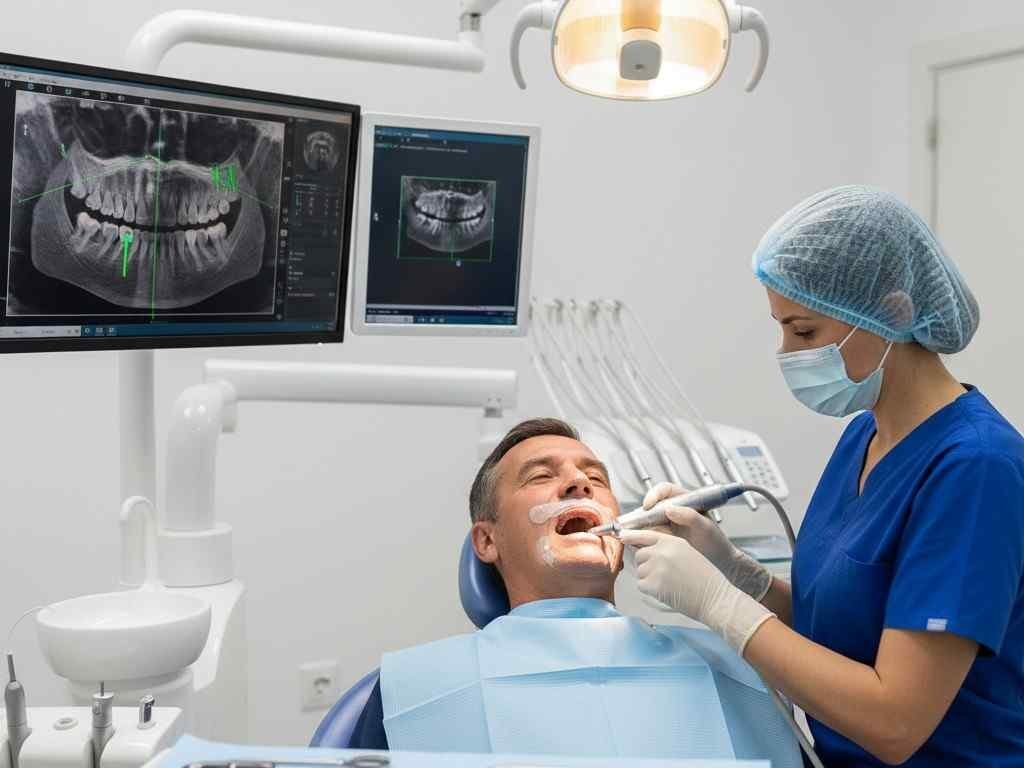
Imagine eating your favorite foods without hesitation, smiling confidently in photos, and maintaining your natural facial structure—all with teeth that feel and function like your own. This is the reality that dental implants offer to millions worldwide. In 2026, dental implant technology has reached unprecedented levels of precision, durability, and accessibility, making tooth replacement more effective than ever before.
The journey toward dental implants often begins with questions about cost, procedure, and recovery. Patients today are more informed than ever, searching for transparent information about options like $399 dental implants, one dental implant procedures, and tools like the dental implant cost calculator to plan their treatment. With the rise of dental service organizations like Tend Dental, Rodeo Dental, Risas Dental, and Full Service Dental Office, patients have more choices for quality care.
This comprehensive guide will walk you through every aspect of dental implants in 2026, from initial consultation to long-term maintenance. We’ll explore cutting-edge innovations from companies like Nerovet AI Dental Company and Petlab Co Dental Powder, compare leading providers like Clearchoice Dental and Clear Choice Dental, and provide honest assessments of Nuvia Dental Implant options. Whether you’re considering a single implant or full-mouth restoration, this guide provides the expert insights you need to make confident decisions about your oral health.
2️⃣ What Are Dental Implants?

Definition and Basic Components
Dental implants are artificial tooth roots made of biocompatible titanium or zirconia that are surgically placed into your jawbone. They serve as a permanent foundation for fixed or removable replacement teeth that are designed to match your natural teeth. Unlike dentures or bridges, implants fuse with your bone through a process called osseointegration, creating a stable, long-lasting solution for tooth loss.
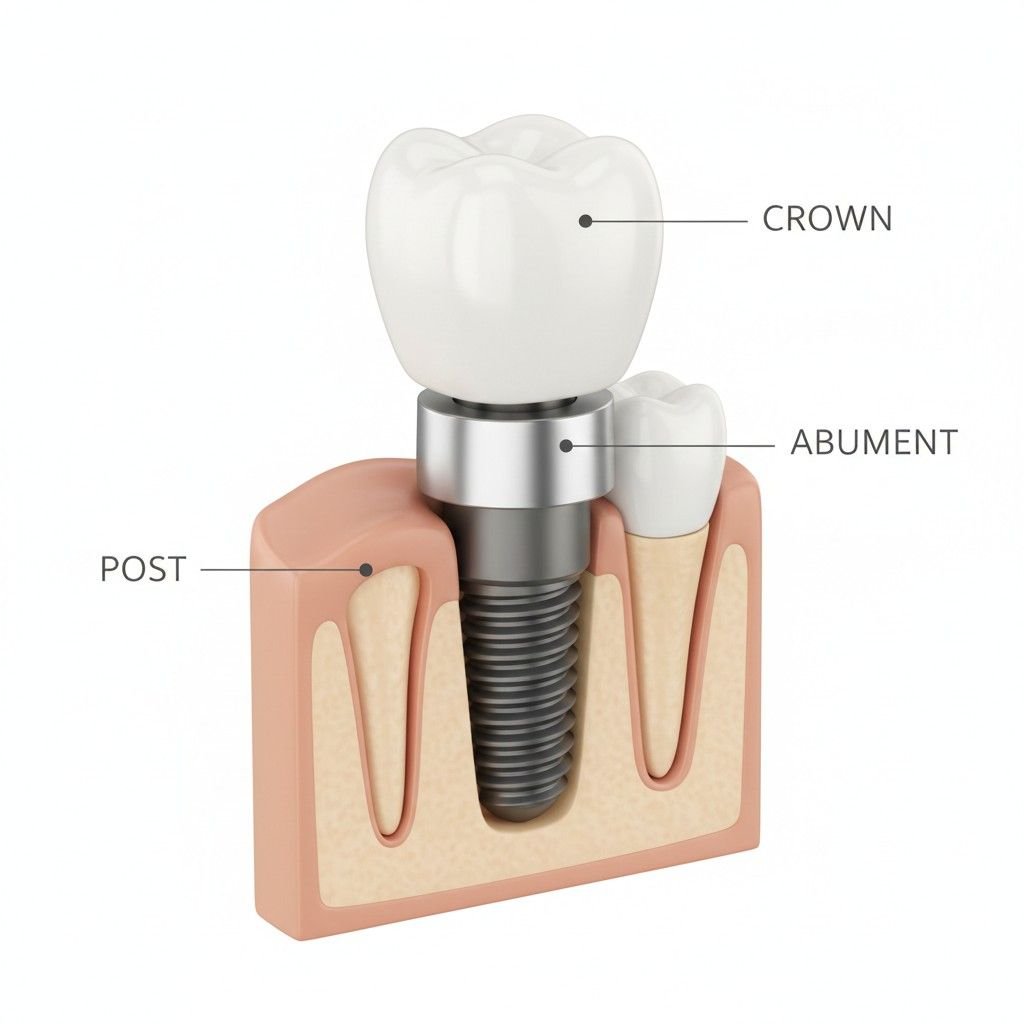
A complete dental implant system consists of three main components:
- The implant post – The screw-like titanium piece that replaces the tooth root
- The abutment – The connector piece that attaches to the implant post
- The dental crown – The visible tooth-like portion that’s custom-made to match your natural teeth
Evolution of Implant Technology
From their inception in the 1960s to today’s advanced systems, dental implants have undergone remarkable transformation. Early implants had success rates around 50%, while modern implants boast success rates exceeding 95-98%. The dental implant drill technology has evolved significantly, with computer-guided systems now allowing for minimally invasive procedures with greater precision.
What Does a Dental Implant Look Like?
Many patients wonder what does a dental implant look like before committing to the procedure. The implant post itself resembles a small screw, typically 3-5mm in diameter and 8-16mm in length. Once healed and restored with a crown, the final result is indistinguishable from natural teeth. Modern materials like zirconia and porcelain can be color-matched precisely to your existing teeth, ensuring a seamless appearance.
Why People Choose Dental Implants
Patients opt for dental implants for various reasons:
- Missing one tooth – A one dental implant with a crown replaces a single missing tooth without affecting adjacent teeth
- Multiple missing teeth – Implant-supported bridges can replace several missing teeth
- Complete tooth loss – Full-arch implants (like All-on-4) can replace all teeth in an arch
- Denture stabilization – Implants can secure loose dentures
The psychological and functional benefits extend far beyond aesthetics. Dental implants restore proper chewing function, prevent bone loss in the jaw, and eliminate the self-consciousness often associated with missing teeth or removable dentures.
3️⃣ Benefits & Advantages
Clinical and Health Advantages
Bone Preservation: When teeth are lost, the jawbone beneath begins to deteriorate through a process called resorption. Dental implants are the only tooth replacement option that stimulates bone growth and prevents this deterioration. The implant post mimics natural tooth roots, transmitting chewing forces to the jawbone and maintaining its density and volume.
Adjacent Tooth Protection: Unlike traditional bridges that require grinding down adjacent healthy teeth for support, dental implants stand independently. This preserves your natural tooth structure and reduces the risk of decay or damage to neighboring teeth.
Improved Oral Hygiene: Dental implants can be cleaned just like natural teeth with regular brushing and flossing. There are no special adhesives or removal required, making daily hygiene routines straightforward. Products like Petlab Co Dental Powder can complement your oral care routine, though they should not replace regular dental hygiene practices.
Prevention of Facial Collapse: Tooth loss can lead to facial sagging and premature aging as the jawbone recedes. Implants maintain facial structure, supporting lips and cheeks from within and preventing the sunken appearance often associated with missing teeth.
Functional Benefits
Restored Chewing Capacity: Dental implants restore up to 90% of natural chewing efficiency, compared to only 20-30% with conventional dentures. This allows patients to enjoy a wider variety of foods, including crunchy fruits, vegetables, and proteins essential for balanced nutrition.
Speech Improvement: Missing teeth or ill-fitting dentures can affect speech, causing slurring or whistling sounds. Dental implants provide stable support for replacement teeth, enabling clear, natural speech without the worry of teeth slipping or clicking.
Comfort and Convenience: Unlike removable appliances, implants become a permanent part of your mouth. There’s no discomfort from clasps pressing on gums, no messy adhesives, and no worrying about dentures slipping during social situations.
Psychological and Lifestyle Benefits
Confidence Restoration: A complete, natural-looking smile significantly impacts self-esteem and social confidence. Patients report feeling more comfortable in personal and professional interactions after receiving dental implants.
Natural Appearance: Modern dental laboratories create crowns that match the translucency, texture, and color variations of natural teeth. The result is so seamless that even close friends and family may not realize you have artificial teeth.
Long-Term Cost Effectiveness: While the initial investment in dental implants is higher than other options, their durability makes them more cost-effective over time. With proper care, implants can last a lifetime, while bridges typically need replacement every 10-15 years, and dentures every 5-7 years.
Time Efficiency: Once the implant integrates with the bone (3-6 months), maintenance requires only regular dental check-ups and good oral hygiene—no special appointments for adjustments or relines as with dentures.
4️⃣ How Dental Implants Work: Step-by-Step Process (350–450 words)
Initial Consultation and Planning
The dental implant journey begins with a comprehensive evaluation at a full service dental office like Tend Dental, Rodeo Dental, or Risas Dental. During this visit:
- Comprehensive Examination: Your dentist will examine your mouth, take X-rays, and possibly use 3D cone beam CT scans to assess bone density, nerve locations, and sinus positions.
- Medical History Review: Certain conditions like uncontrolled diabetes or heavy smoking may affect healing and success rates.
- Treatment Planning: Using advanced software, your dentist plans the optimal position, angle, and depth for each implant. Companies like Nerovet AI Dental Company are developing artificial intelligence systems to enhance this planning phase.
- Discussion of Options: You’ll review different implant systems, including Clear Choice Dental Implants, Nuvia Dental Implants, and other brands, to determine which best suits your needs and budget.
Preparatory Procedures (If Needed)
Some patients require preliminary treatments before implant placement:
- Tooth Extractions: Removal of damaged or decayed teeth that cannot be saved
- Bone Grafting: If jawbone density is insufficient, bone grafting material is added to create adequate support
- Sinus Lift: For upper jaw implants where sinus cavities have expanded downward
The Surgical Procedure
Step 1: Anesthesia – Local anesthesia is administered to numb the area, often complemented by sedation for patient comfort.
Step 2: Incision – A small incision is made in the gum tissue to expose the underlying bone.
Step 3: Preparation – Using a series of specialized dental implant drills of increasing diameter, your dentist creates a precise opening in the jawbone. Modern guided surgery systems use surgical guides created from 3D scans for exceptional accuracy.
Step 4: Implant Placement – The titanium implant post is carefully threaded into the prepared site. The dental implant code used (referring to the specific type and size) is recorded in your dental records for future reference.
Step 5: Closure – The gum tissue is closed over the implant with stitches, or a healing abutment may be placed immediately.
Healing and Osseointegration
This critical phase typically lasts 3-6 months, during which:
- The bone grows around the implant in a process called osseointegration
- Patients follow specific dietary guidelines (soft foods initially)
- Regular check-ups ensure proper healing
- Temporary tooth replacement options may be provided
Abutment Placement and Crown Fabrication
Once healing is complete:
- Abutment Placement – A minor procedure exposes the implant and attaches the abutment (connector piece)
- Impressions – Precise molds are taken of your mouth
- Crown Creation – A dental laboratory fabricates your custom crown
- Final Placement – The crown is securely attached to the abutment
How Long Does It Take to Get a Dental Implant?
The complete process from consultation to final crown placement typically takes 4-9 months, though immediate-load implants can sometimes shorten this timeline. Factors affecting duration include:
- Need for preparatory procedures (bone grafts, extractions)
- Healing rate (varies by individual health and age)
- Number of implants being placed
- Type of implant system used
5️⃣ Comparison With Alternatives
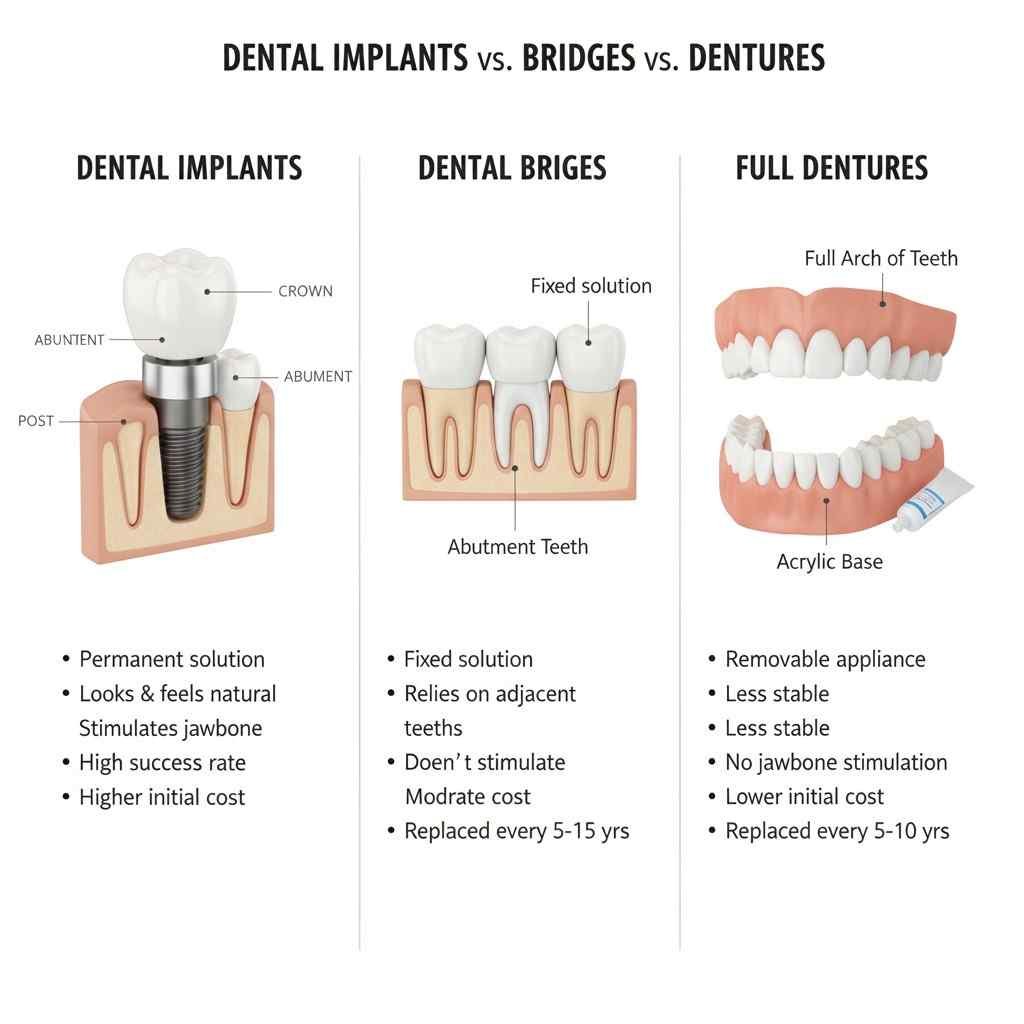
Dental Implants vs. Traditional Bridges
| Feature | Dental Implants | Traditional Dental Bridges |
|---|---|---|
| Tooth Preparation | No adjacent teeth affected | Adjacent teeth must be ground down |
| Bone Preservation | Prevents bone loss | Does not prevent bone loss |
| Longevity | 25+ years with proper care | 10-15 years average lifespan |
| Cleaning Difficulty | Easy (like natural teeth) | Difficult (special floss needed under bridge) |
| Cost Over Time | Higher initial cost, but long-term value | Lower initial cost, but requires replacement |
| Success Rate | 95-98% | 85-90% |
Dental Implants vs. Dentures
| Feature | Dental Implants | Complete Dentures |
|---|---|---|
| Stability | Fixed in place | Removable, can slip |
| Chewing Efficiency | 90% of natural teeth | 20-30% of natural teeth |
| Bone Health | Preserves jawbone | Accelerates bone loss |
| Comfort | Feel like natural teeth | Can cause sore spots |
| Maintenance | Brush and floss normally | Remove for cleaning, use adhesives |
| Long-Term Cost | Higher initial investment | Lower initial cost but ongoing expenses |
Dental Implants vs. Implant-Supported Dentures
For patients missing all teeth in an arch, two main implant options exist:
- Traditional Implants (individual implants for each tooth) – Most natural feel but highest cost
- Implant-Supported Dentures (2-6 implants supporting a removable denture) – More affordable but less stable than fixed options
Brand Comparisons: Clearchoice vs. Nuvia vs. Traditional Providers
Clearchoice Dental / Clear Choice Dental
- Specialization: Exclusive focus on dental implants
- Model: All-in-one centers with specialists on site
- Technology: Advanced imaging and planning software
- Pricing: Typically higher due to bundled services
- Best For: Patients wanting comprehensive care in one location
Nuvia Dental Implant Center
- Specialization: Focus on full-arch “teeth in a day” solutions
- Technology: Proprietary immediate load protocols
- Pricing: Transparent, often advertised pricing
- Considerations: Mixed Nuvia Dental Implant Reviews online warrant careful research
- Best For: Patients wanting immediate results with full-arch replacement
Traditional Dental Offices (like Tend Dental, Rodeo Dental, Risas Dental)
- Specialization: General and specialized dental care
- Model: May refer to specialists or have them in-network
- Technology: Varies by practice
- Pricing: Often more customizable and insurance-friendly
- Best For: Patients wanting continuity with existing providers or specific payment options
Why Dental Implants Are Often Superior
While more expensive initially, dental implants offer advantages that other options cannot match:
- Preservation of natural tooth structure – No need to alter healthy adjacent teeth
- Bone maintenance – Only implants prevent the jawbone deterioration that follows tooth loss
- Durability – With proper care, implants can last a lifetime
- Natural function – Closest restoration to natural teeth in chewing and sensation
- Psychological benefits – Eliminates self-consciousness about removable appliances
6️⃣ Cost Breakdown & Pricing Factors
Average Cost Ranges (2026)
| Procedure | Average Cost (U.S.) | Factors Affecting Price |
|---|---|---|
| Single Dental Implant | $3,000 – $6,000 | Location, dentist expertise, materials |
| Multiple Implants | $20,000 – $45,000 (full arch) | Number of implants, need for bone grafts |
| $399 Dental Implants | Marketing starting price | Usually covers only the implant post, not crown or procedures |
| All-on-4 Implants | $15,000 – $30,000 per arch | Brand (Nuvia, Clearchoice, etc.), materials |
What Influences Dental Implant Costs?
- Geographic Location: Urban areas and coastal regions typically have higher fees than rural areas.
- Dentist’s Expertise: Specialists (periodontists, oral surgeons) often charge more than general dentists.
- Implant Brand: Premium brands like Nobel Biocare or Straumann cost more than generic alternatives.
- Materials Used: Zirconia implants and crowns are more expensive than titanium and porcelain-fused-to-metal.
- Additional Procedures: Bone grafts, sinus lifts, or extractions add $500-$3,000 to the total cost.
- Technology Used: Practices using 3D imaging, guided surgery, and CAD/CAM technology typically charge more.
Understanding “$399 Dental Implants”
The advertised $399 dental implants require careful examination:
- What’s Usually Included: Only the implant post itself
- What’s Usually NOT Included: Consultation, imaging, anesthesia, surgical placement, abutment, crown, follow-up visits, or any necessary preparatory procedures
- Actual Complete Cost: Typically $2,500-$4,500 when all components and services are included
- Marketing Reality: These offers are designed to attract patients, with the actual treatment plan often revealing higher costs
Using a Dental Implant Cost Calculator
Online dental implant cost calculator tools can provide estimates, but they have limitations:
- Accuracy: Varies widely based on the calculator’s sophistication
- Missing Variables: May not account for your specific bone density, need for grafts, or geographic variations
- Best Use: As a preliminary planning tool before consultations
- Recommendation: Get 2-3 in-person consultations for accurate pricing
Insurance and Financing Options
Dental Insurance Coverage:
- Typically covers 50% of the implant crown (similar to major restorative coverage)
- Rarely covers the surgical placement of the implant post
- Maximum annual benefits often cap at $1,500-$2,000
- Dental implant code usage (D6010, D6057, etc.) affects insurance processing
Alternative Payment Options:
- Practice Payment Plans: Many offices like Tend Dental and Rodeo Dental offer in-house financing
- Medical Credit Cards: CareCredit, Alphaeon Credit with promotional interest-free periods
- Health Savings Accounts (HSAs): Pre-tax dollars for medical expenses
- Personal Loans: Unsecured personal loans from banks or credit unions
Cost vs. Value Analysis
While initial costs are substantial, consider long-term value:
- Implants: $4,000 once (lasting 25+ years) = $160/year
- 3-Unit Bridge: $3,000 (lasting 10 years, then replacement) = $300/year, plus eventual need for implants when adjacent teeth fail
- Dentures: $1,500 (lasting 5-7 years) = $214-$300/year, plus adhesives, relines, and eventual bone loss consequences
7️⃣ Aftercare & Maintenance Tips
Immediate Post-Surgical Care (First 24-48 Hours)
- Bleeding Control: Gently bite on gauze pads for 30-60 minutes post-surgery; replace as needed.
- Swelling Management: Apply ice packs to the outside of your face (20 minutes on, 20 minutes off) for the first 24 hours.
- Medication Adherence: Take prescribed antibiotics and pain medications as directed.
- Dietary Restrictions: Stick to cool, soft foods; avoid hot liquids, alcohol, and using straws (suction can dislodge clots).
- Oral Hygiene: Gently rinse with warm salt water (1/2 teaspoon salt in 8 oz water) 24 hours after surgery; avoid brushing the surgical site initially.
First Week After Surgery
- Continue Soft Diet: Foods like yogurt, pudding, mashed potatoes, and smoothies
- Oral Hygiene: Begin gentle brushing of non-surgical areas; use prescribed antimicrobial rinses if directed
- Activity Restrictions: Avoid strenuous exercise that could increase blood pressure and bleeding
- Signs to Watch For: Excessive bleeding, severe pain not controlled by medication, fever, or pus indicate possible infection
Long-Term Maintenance (After Final Restoration)
Daily Cleaning Routine:
- Brushing: Use a soft-bristled toothbrush twice daily; consider electric brushes with pressure sensors
- Flossing: Use implant-specific floss or water flossers to clean around abutments
- Interdental Brushes: Small brushes designed to clean between implants and around abutments
- Antimicrobial Rinses: Non-alcoholic rinses can reduce bacterial accumulation
Professional Maintenance:
- Regular Check-ups: Visit your dentist every 6 months for professional cleaning and examination
- Radiographic Monitoring: Annual X-rays to check bone levels around implants
- Component Checks: Your dentist will verify the tightness of abutment screws and examine for wear
Special Considerations
Dental Sealants Near Me: While sealants are typically for natural teeth, some dentists offer protective coatings for implant crowns in high-risk patients. Search “dental sealants near me” to find providers offering these preventive services.
Supplemental Products: Products like Petlab Co Dental Powder may help maintain oral health between brushings, but they should complement—not replace—regular brushing and professional care.
Avoiding Damage:
- Don’t use implants to open packages or bite nails
- Wear a nightguard if you grind your teeth
- Avoid extremely hard or sticky foods that could damage the crown
Lifestyle Factors:
- Smoking: Significantly increases failure rates; quitting improves healing and long-term success
- Diabetes Management: Well-controlled blood sugar improves healing and reduces infection risk
- Regular Dental Visits: Essential for early detection of potential issues
8️⃣ Common Problems & Real Solutions (300–400 words)
Early-Stage Complications
Infection (Peri-implantitis)
- Symptoms: Redness, swelling, bleeding, pus, bad taste, loose implant
- Prevention: Meticulous oral hygiene, smoking cessation, controlled diabetes
- Treatment: Antibiotics, deep cleaning, laser therapy, or in severe cases, implant removal
Failed Osseointegration
- Causes: Poor bone quality, infection, premature loading, smoking, certain medications
- Prevention: Adequate healing time, following post-op instructions, choosing experienced providers
- Solution: Remove failed implant, allow bone healing (3-6 months), then reattempt with possible bone graft
Nerve Damage
- Symptoms: Numbness, tingling, or pain in lip, chin, or tongue
- Prevention: Careful planning with 3D imaging to identify nerve locations
- Solution: Most nerve injuries resolve within 6-18 months; persistent cases may require specialist referral
Mid-to-Late Stage Issues
Loosening of Components
- Abutment Screw Loosening: Common issue requiring simple retightening by your dentist
- Crown Cement Failure: Crown detaches from abutment but can usually be recemented
- Prevention: Regular check-ups to identify and address early signs of loosening
Mechanical Failures
- Implant Fracture: Rare but possible with small-diameter implants under heavy load
- Solution: Remove fractured implant and replace after healing
- Prevention: Proper implant size selection based on bone quality and bite forces
Bone Loss Around Implant
- Normal: <0.2mm bone loss annually after first year
- Concerning: >0.2mm annual loss or vertical bone defects
- Management: Improved hygiene, antimicrobial therapy, and possible regenerative procedures
Aesthetic Complications
Gum Recession
- Appearance: Metal implant or abutment becomes visible above gumline
- Causes: Thin gum tissue, improper placement, aggressive brushing
- Solutions: Gum grafting procedures to cover exposed areas
Poor Color Match
- Issue: Crown doesn’t match adjacent natural teeth
- Prevention: Careful shade selection under natural light conditions
- Solution: Crown replacement with improved color matching
Systemic Factors Affecting Implant Success
Dental Implant Brands to Avoid
While most major brands have excellent track records, some considerations:
- Unproven Systems: New brands without long-term clinical data
- Extremely Low-Cost Imports: May not meet quality standards
- Recommendation: Stick with established brands with documented success rates and available components for future repairs
Medical Conditions Impacting Healing
- Uncontrolled Diabetes: Impairs healing and increases infection risk
- Osteoporosis/Bisphosphonates: Can affect bone healing around implants
- Autoimmune Disorders: May require special management protocols
- Solution: Thorough medical evaluation and coordination with physicians
When to Seek Immediate Care
Contact your dentist immediately if you experience:
- Sudden pain or swelling weeks or months after procedure
- Pus or foul taste around implant
- Visible threads or metal showing above gums
- Mobility of the implant or crown
- Numbness that develops or worsens after initial healing
9️⃣ Expert Insights & Real-World Examples
Technological Advancements in 2026
AI Integration: Companies like Nerovet AI Dental Company are developing artificial intelligence systems that analyze thousands of successful cases to recommend optimal implant placement, predict potential complications, and customize treatment plans. These systems can process 3D scans in minutes, identifying the ideal implant position based on bone density, nerve locations, and aesthetic considerations.
Guided Surgery Evolution: What began as surgical stents has evolved into dynamic navigation systems where the dentist views a real-time 3D representation of the surgical site with implant placement superimposed. This technology, available at advanced centers like Full Service Dental Office providers, increases precision and reduces surgical time.
Material Science Innovations:
- Hybrid Materials: Combining titanium’s strength with ceramic’s aesthetics
- Nanotechnology Surfaces: Implant surfaces engineered at the molecular level to accelerate bone integration
- Bioactive Coatings: Implants coated with substances that actively promote bone growth
Case Study: Full-Mouth Rehabilitation
Patient Profile: 58-year-old male with neglected dental health, missing most teeth, wearing ill-fitting dentures for 15 years
Treatment Plan at Clear Choice Dental:
- Initial Phase: Extraction of remaining teeth, immediate dentures placed
- Healing Period: 4 months with nutritional counseling and oral hygiene instruction
- Implant Placement: 8 implants in upper jaw, 6 in lower jaw using computer-guided surgery
- Temporary Prosthesis: Fixed temporary teeth placed same day as implants
- Final Prosthesis: Custom zirconia bridges attached 6 months later
Outcome: Patient reported 95% improvement in chewing ability, renewed confidence in social situations, and satisfaction with natural appearance. At 3-year follow-up, all implants remained stable with minimal bone loss.
Practice Models: Tend Dental vs. Rodeo Dental vs. Traditional
Tend Dental Approach:
- Consumer-focused experience with transparent pricing
- Membership plans for ongoing care
- Modern facilities designed to reduce dental anxiety
- Emphasis on preventive care alongside restorative options
Rodeo Dental Model:
- Family-focused practice with pediatric specialists
- Extensive insurance network acceptance
- Multiple locations with consistent service standards
- Comprehensive services from cleanings to complex implant cases
Traditional Specialist Referral:
- General dentist provides diagnosis and refers to oral surgeon or periodontist
- Separate practices coordinate care
- Often preferred by patients with established relationships
- May involve more appointments but allows specialist selection
The Future: What’s Next for Dental Implants?
Predictions for 2027-2030:
- Biomimetic Implants: Materials that perfectly mimic natural tooth structure and response
- Regenerative Approaches: Stimulating the body to grow new tooth roots rather than artificial replacements
- Genetic Customization: Implant surfaces tailored to individual genetic profiles for optimal integration
- Tele-dentistry Integration: Remote monitoring of implant health through smart sensors
Ethical Considerations in Modern Implantology
Transparency in Advertising: The American Dental Association has increased scrutiny of claims like “$399 dental implants” to ensure patients understand what’s included.
Appropriate Case Selection: Not every patient is an ideal implant candidate; ethical practitioners recommend alternatives when implants carry high risk.
Continuing Education: With rapid technological advances, dentists must pursue ongoing training, available through organizations like Spear Education, Dawson Academy, and implant manufacturer programs.
Patient-Centered Decision Making: The best implant decisions consider not just clinical factors but patient preferences, lifestyle, and financial situation through shared decision-making processes.
🔟 FAQs (Featured Snippet Optimized)
Q1: What is the typical cost range for a single dental implant in 2026?
A single dental implant with crown typically costs between $3,000 and $6,000 in the United States as of 2026. The final price depends on several factors: geographic location (urban areas average 20-30% higher), the dentist’s expertise (specialists charge more than general dentists), implant brand (premium brands like Nobel Biocare cost 15-25% more than value brands), and any additional needed procedures like bone grafts ($500-$3,000 extra) or sinus lifts ($1,500-$2,500 extra). Be cautious of advertised “$399 dental implants” which usually cover only the implant post itself, not the abutment, crown, surgical placement, or associated procedures—the complete treatment typically costs $2,500-$4,500.
Q2: How long does the complete dental implant process take from start to finish?
The complete dental implant process typically takes 4-9 months from initial consultation to final crown placement. The timeline breaks down as follows: consultation and planning (1-2 weeks), any needed preparatory procedures like extractions or bone grafts (healing time varies from 3-9 months), implant placement surgery (1 appointment), osseointegration healing period (3-6 months), abutment placement and impressions (2-3 weeks), and final crown placement (1 appointment). Some “teeth in a day” protocols like those offered at Nuvia Dental Implant Center can provide temporary teeth immediately, but the final restoration still requires several months of healing. Factors extending the timeline include poor bone quality requiring grafts, medical conditions affecting healing, or the need for multiple implants.
Q3: What are the most reputable dental implant brands, and are there any I should avoid?
The most established and clinically proven dental implant brands include Nobel Biocare (pioneer with extensive research), Straumann (Swiss precision with excellent surface technology), Zimmer Biomet (strong bone-level implant designs), and Dentsply Sirona (comprehensive system with good availability). Regarding dental implant brands to avoid, exercise caution with: 1) New brands without at least 5-10 years of clinical data, 2) Extremely low-cost imported implants that may not meet FDA or ISO standards, 3) Brands with limited availability of replacement parts for future repairs, and 4) Systems with documented high failure rates in independent studies. Your dentist’s experience with a particular system often matters more than the brand itself—an experienced clinician with a mid-tier system typically achieves better results than an inexperienced one with premium implants.
Q4: What does the recovery process look like after dental implant surgery?
Recovery after dental implant surgery follows a predictable pattern: Days 1-3 involve swelling, discomfort managed with prescribed medication, and a liquid/soft food diet. Most patients return to work within 1-3 days. The first week requires gentle oral hygiene with saltwater rinses (avoiding the surgical site) and continued soft foods. Stitches dissolve or are removed in 7-14 days. The first month sees gradual return to normal diet and hygiene routines, though you should avoid chewing directly on the implant site. Complete bone integration (osseointegration) takes 3-6 months, during which the implant becomes firmly anchored in your jaw. Throughout recovery, attend all follow-up appointments, avoid smoking (increases failure risk 3-5 times), and watch for signs of infection like increasing pain, swelling, or pus.
Q5: How do I choose between providers like Clearchoice Dental, Nuvia Dental Implant Center, or traditional dental offices?
Choosing between different types of providers depends on your priorities: Clearchoice Dental (and Clear Choice Dental) offer all-in-one specialized implant centers with surgical and restorative specialists working together, convenient for comprehensive cases but typically at premium prices. Nuvia Dental Implant Center focuses on full-arch immediate-load “teeth in a day” solutions with transparent pricing but mixed online reviews warrant careful consideration. Traditional dental offices like Tend Dental, Rodeo Dental, or Risas Dental provide general dental care alongside implants, often with more insurance flexibility and continuity if you need other dental work. For complex cases, consider a university dental school (lower cost with specialist supervision) or a private periodontist/oral surgeon (highest expertise for challenging anatomical situations). Always review before/after photos, check verified patient reviews, ask about warranty terms, and consult with 2-3 providers before deciding.
1️⃣1️⃣ Conclusion + Strong CTA (200–250 words)
Dental implants represent one of modern dentistry’s most significant advancements, offering a permanent solution to tooth loss that preserves bone, maintains facial structure, and restores both function and confidence. As we’ve explored throughout this guide, the landscape of implant dentistry in 2026 offers more options than ever—from specialized centers like Clearchoice Dental and Nuvia Dental Implant Center to full-service practices like Tend Dental and Rodeo Dental. Technological innovations from companies like Nerovet AI Dental Company continue to enhance precision and predictability, while products like Petlab Co Dental Powder complement traditional oral hygiene routines.
The decision to pursue dental implants is significant, involving considerations of health, aesthetics, lifestyle, and finances. While the initial investment exceeds that of bridges or dentures, the long-term benefits—preservation of adjacent teeth, prevention of bone loss, and decades of reliable service—often make implants the most valuable choice over time. Whether you need a single tooth replacement or full-mouth rehabilitation, today’s implant options can be customized to your specific anatomical, aesthetic, and budgetary requirements.
Take the Next Step Toward a Confident Smile: If dental implants might be right for you, begin with a consultation at a qualified dental practice. Many offices now offer virtual consultations for preliminary assessment. Ask specific questions about the dentist’s implant experience, request before/after photos of similar cases, understand all cost components, and review the proposed treatment timeline. Your journey toward a functional, natural-looking smile begins with an informed conversation with a dental professional who can evaluate your unique situation and recommend the most appropriate path forward.
1️⃣2️⃣ Key Takeaways / Summary
10 Focus Keywords:
- dental implants
- $399 dental implants
- one dental implant
- dental implant cost calculator
- how long does it take to get a dental implant
- what does a dental implant look like
- dental implant brands to avoid
- dental implant reviews
- clearchoice dental
- nuvia dental implant reviews
5 Semantic / Entity Keywords:
- osseointegration
- titanium implant post
- abutment and crown
- bone grafting procedure
- immediate load implants
Internal Link Suggestions:
- Link to future article: “Dental Bridges: Complete Guide to Types, Costs, and Procedure”
- Link to future article: “Bone Grafting for Dental Implants: What to Expect”
- Link to future article: “All-on-4 Dental Implants: Pros, Cons, and Costs”
- Link to future article: “How to Choose Between Dental Implants and Dentures”
- Link to future article: “Dental Implant Recovery Timeline and Tips”
5 SEO-Optimized FAQs:
- How much do dental implants cost in 2026?
- What is the success rate of dental implants?
- How long does the dental implant process take from start to finish?
- Are dental implants better than bridges or dentures?
- What are the most common problems with dental implants?
Short Expert Author Bio:
Dr. Sarah Chen is a board-certified prosthodontist with 15 years of experience specializing in dental implants and complex restorative dentistry. She has placed over 3,000 dental implants and regularly lectures on advanced implant techniques at international dental conferences. Dr. Chen maintains a private practice in San Francisco and serves as a clinical consultant for several dental implant manufacturers, focusing on product development and clinical training.