🦷 Dental Bridges: Complete 2026 Expert Guide
📖 Table of Contents
- Introduction
- What Are Dental Bridges?
- Benefits & Advantages
- How Dental Bridges Work: Step-by-Step Process
- Comparison With Alternatives
- Cost Breakdown & Pricing Factors
- Aftercare & Maintenance Tips
- Common Problems & Real Solutions
- Expert Insights & Real-World Examples
- FAQs
- Conclusion
- Key Takeaways
1️⃣ Introduction (200–250 words)
For millions living with missing teeth, the gap isn’t just physical—it affects confidence, nutrition, and overall quality of life. Dental bridges have stood the test of time as a reliable, effective solution for replacing missing teeth, and in 2026, they remain a popular choice for patients seeking balance between functionality, aesthetics, and affordability. Unlike removable dentures or surgical implants, bridges offer a fixed, permanent-feeling restoration that can transform your smile in just a few weeks.
Today’s patients approach dental bridge decisions with practical questions: What does a dental bridge look like? Is a dental bridge permanent? How much does a dental bridge cost without insurance? These concerns are valid, and modern dentistry has evolved to address them with advanced materials and techniques. From traditional 3 unit dental bridges to innovative cantilever designs, the options have expanded while becoming more predictable and comfortable than ever before.
This comprehensive 2026 guide explores every aspect of dental bridges, providing clear answers to common concerns about MRI compatibility, longevity, and daily maintenance. We’ll examine real dental bridge before and after transformations, including before and after front dental bridge cases and dental bridge front teeth before and after results. Whether you’re missing a single tooth or several consecutive teeth, understanding the complete picture of dental bridges will help you make an informed decision about this time-tested tooth replacement option.
2️⃣ What Are Dental Bridges?
Definition and Basic Concept
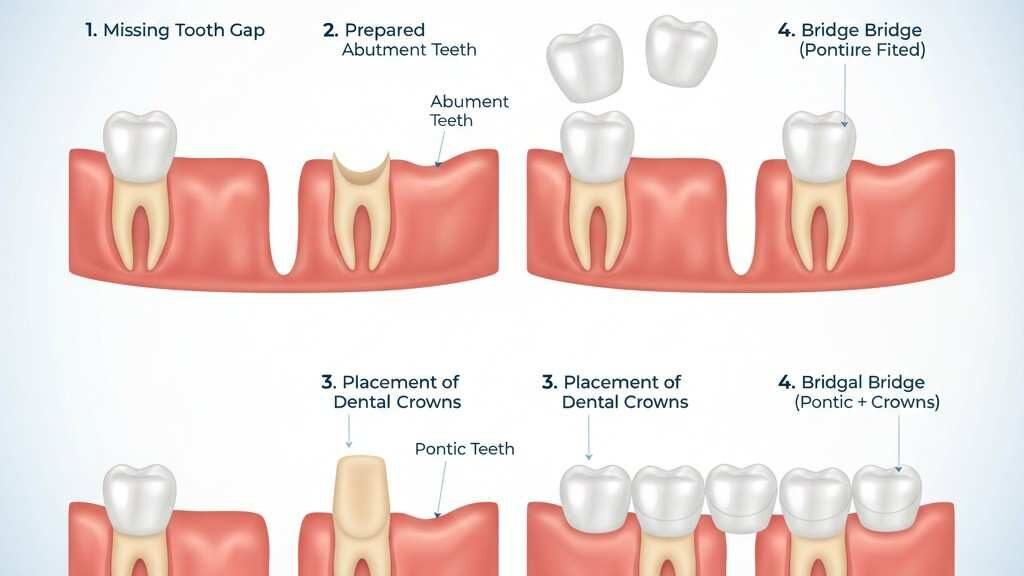
A dental bridge is a fixed dental restoration used to replace one or more missing teeth by joining an artificial tooth permanently to adjacent natural teeth or dental implants. The name comes from the structure’s function—it literally “bridges” the gap created by missing teeth. Unlike removable dentures that you take out daily, a dental bridge is cemented into place and can only be removed by a dentist.
Components of a Dental Bridge
Every dental bridge consists of:
- Abutment Teeth: The natural teeth on either side of the gap that serve as anchors (also called “pillar teeth”)
- Pontics: The artificial teeth that fill the gap
- Connectors: The means by which the pontic attaches to the abutments (either through crowns or metal/resin wings)
Visualizing Dental Bridges
Patients often wonder what does a dental bridge look like, and the answer varies by type. A dental bridge diagram typically shows the abutment teeth crowned on either side with the pontic suspended between them. In practice, modern bridges are virtually indistinguishable from natural teeth. Dental bridge images and dental bridge pictures available online show the seamless integration possible with today’s ceramic and porcelain materials.
Types of Dental Bridges
- Traditional Fixed Bridges: The most common type, involving crowns on adjacent teeth with a pontic between them
- Cantilever Bridges: Used when there are adjacent teeth on only one side of the missing tooth/teeth
- Maryland Bonded Bridges: Use metal or porcelain wings bonded to the backs of adjacent teeth
- Implant-Supported Bridges: Use dental implants rather than natural teeth as abutments
The Evolution of Bridge Technology
From the gold bridges of ancient civilizations to today’s zirconia and lithium disilicate restorations, dental bridge materials have evolved dramatically. The introduction of dental code for bridge procedures (D6200-D6299 series) standardized treatment protocols, while CAD/CAM technology has revolutionized fabrication precision. Modern digital impressions and 3D printing have reduced wait times from weeks to days, sometimes even offering same day dental bridge options in certain cases.
Who Are Dental Bridges For?
Dental bridges are an excellent solution for patients who:
- Have one or more missing teeth in a row
- Have strong, healthy adjacent teeth to support the bridge
- Prefer a non-surgical alternative to implants
- Want a fixed rather than removable solution
- Have adequate bone structure but don’t want bone grafting
- Need a cost-effective solution for tooth replacement
Understanding “Permanence” in Dental Bridges
When patients ask is a dental bridge permanent, they typically mean two things: Is it fixed in place (not removable), and how long will it last? Dental bridges are considered “permanent” in that they’re cemented in place and not meant to be removed daily like dentures. However, they’re not permanent in the lifelong sense—with proper care, they typically last 10-15 years before needing replacement. This differs from permanent dental bridge problems some patients experience, which usually relate to underlying issues rather than the bridge concept itself.
3️⃣ Benefits & Advantages (350–450 words)
Functional Benefits
Restored Chewing Function: Dental bridges restore approximately 75-85% of natural chewing efficiency, significantly better than removable dentures but slightly less than dental implants. This improvement allows patients to enjoy a wider variety of foods, including many that would be challenging with missing teeth or unstable dentures.
Speech Improvement: Missing teeth, particularly front teeth, can affect pronunciation of certain sounds. Bridges fill these gaps, supporting lips and cheeks and enabling clearer speech without the whistling or lisping that sometimes accompanies tooth loss.
Bite Force Distribution: By filling gaps, bridges prevent remaining teeth from shifting into empty spaces, which can lead to bite problems, TMJ disorders, and uneven wear. A properly fitted bridge distributes chewing forces evenly across multiple teeth, protecting your overall dental architecture.
Oral Health Advantages
Prevention of Tooth Migration: When a tooth is lost, adjacent teeth gradually tilt or drift into the empty space, and opposing teeth may supra-erupt. A bridge maintains proper spacing and alignment, preventing these movements that can complicate future dental work.
Easier Cleaning Than Some Alternatives: While bridges require special cleaning techniques, they’re generally easier to maintain than removable partial dentures with clasps that trap food. With proper instruction and tools like dental bridge cleaning tools, most patients adapt quickly to bridge maintenance.
Gum and Bone Support: Though not as effective as implants at preventing bone loss, bridges provide some stimulation to the underlying gum and bone through pressure transmission during chewing, particularly when well-designed.
Aesthetic and Psychological Benefits
Natural Appearance: Modern dental bridges are crafted from advanced ceramics and porcelains that mimic natural tooth translucency, texture, and color variations. Before and after dental bridge photos demonstrate remarkable transformations, particularly with before and after front dental bridge cases where aesthetics are paramount.
Immediate Results: Unlike implants that require months of healing, bridges typically deliver complete results in 2-4 weeks. Some practices even offer same day dental bridge options using in-office milling technology.
Confidence Restoration: A complete smile significantly impacts self-esteem in social and professional situations. Dental bridge front teeth before and after comparisons consistently show not just physical transformation but emotional revitalization in patients.
Practical Advantages
Non-Surgical Solution: For patients who cannot or prefer not to undergo implant surgery, bridges offer a non-surgical alternative with no bone grafting or extended healing periods required.
Shorter Treatment Time: From preparation to final placement, most bridges require only 2-3 appointments over 2-4 weeks, compared to the 4-9 month timeline for implants.
Predictable Outcomes: With decades of clinical success data, bridges have highly predictable outcomes when properly planned and executed by experienced clinicians.
Insurance Coverage: Most dental insurance plans cover bridges at 50% of the cost (under major restorative benefits), whereas implants often have limited or no coverage.
Cost-Effectiveness
While the initial cost of a 3 unit dental bridge is comparable to a single dental implant, bridges become more cost-effective when replacing multiple adjacent teeth. The dental bridge cost without insurance for a three-unit bridge ($2,500-$5,000) is typically less than two implants with crowns ($6,000-$12,000) for the same span.
Preservation Option for Compromised Teeth
When adjacent teeth already have large fillings or need crowns, incorporating them into a bridge can be more conservative than placing separate crowns plus an implant. The bridge utilizes teeth that may need restoration anyway, making efficient use of existing dental work.
4️⃣ How Dental Bridges Work: Step-by-Step Process (350–450 words)
Initial Consultation and Treatment Planning
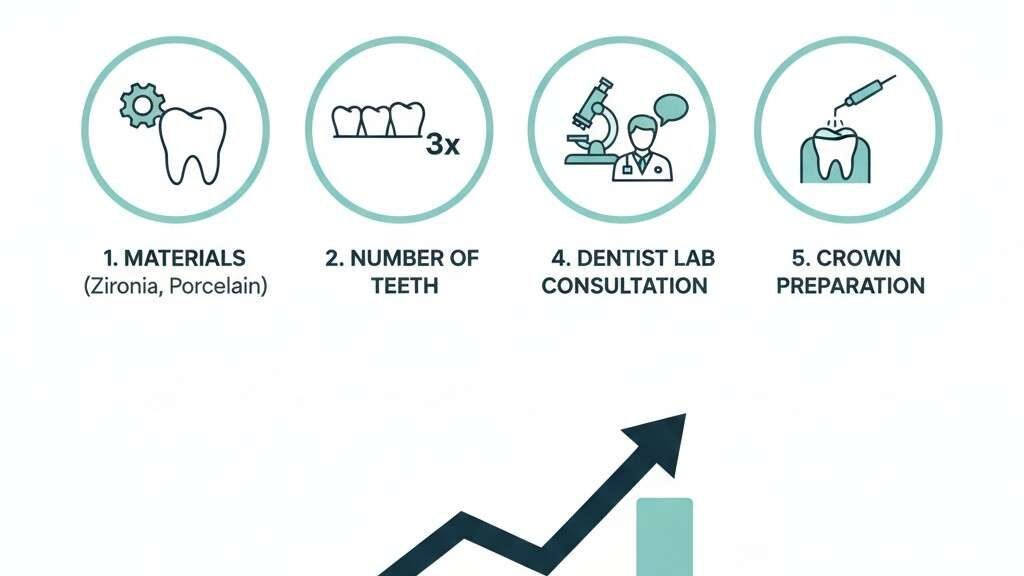
The dental bridge process begins with a comprehensive evaluation at your dental office. During this visit:
- Clinical Examination: Your dentist examines your mouth, assesses the gap, and evaluates the health of potential abutment teeth. They check for decay, gum disease, and adequate tooth structure to support crowns.
- Radiographic Assessment: X-rays, and sometimes 3D scans, reveal bone levels, root health, and the relationship of teeth to nerves and sinuses.
- Discussion of Options: You’ll review different bridge types, materials, and alternatives. Your dentist will show you dental bridge images and dental bridge pictures of similar cases to set realistic expectations.
- Cost Estimate: A detailed breakdown including the dental bridge cost without insurance and any insurance coverage is provided.
- Treatment Timeline: You’ll learn how long does it take to get a dental bridge, typically 2-4 weeks from start to finish.
Tooth Preparation Appointment
Step 1: Anesthesia – Local anesthesia numbs the abutment teeth and surrounding area for comfort.
Step 2: Tooth Reduction – The dentist carefully reshapes the abutment teeth, removing a uniform layer of enamel (typically 1-2mm) to create space for the crowns that will anchor the bridge. For a 3 unit dental bridge, two abutment teeth are prepared.
Step 3: Impressions – Once preparation is complete, precise impressions of your teeth are taken using digital scanners or traditional mold materials. These impressions are sent to a dental laboratory where your custom bridge will be fabricated.
Step 4: Temporary Bridge – A temporary dental bridge is cemented in place to protect prepared teeth, maintain spacing, and provide aesthetics while your permanent bridge is being made. Your dentist will explain what does a temporary dental bridge look like and how to care for it.
Laboratory Fabrication Phase
While you wear your temporary bridge for 2-3 weeks, dental technicians:
- Create precise models from your impressions
- Design the bridge framework using CAD software
- Select shade matching your natural teeth
- Layer porcelain or ceramic to create natural-looking teeth
- Fire the materials in high-temperature ovens for strength
- Polish and glaze for natural luster
Final Placement Appointment
Step 1: Temporary Removal – The temporary bridge is carefully removed, and prepared teeth are cleaned.
Step 2: Trial Fitting – The permanent bridge is tried in to check fit, bite, and color match. Adjustments are made as needed.
Step 3: Cementation – Once perfect fit is confirmed, the bridge is permanently cemented using dental adhesive. Your bite is checked and adjusted to ensure even contact.
Step 4: Oral Hygiene Instruction – You receive specific instructions on how to clean dental bridge, including demonstration of floss for dental bridge and dental bridge cleaning tools.
Follow-Up and Adjustment
A follow-up appointment in 1-2 weeks allows your dentist to:
- Check gum tissue response
- Verify comfort and function
- Make minor adjustments if needed
- Reinforce proper cleaning techniques
Special Considerations for Different Bridge Types
Maryland Bonded Bridges: Require minimal tooth preparation—only slight reshaping of the back surfaces of adjacent teeth for wing attachment.
Cantilever Bridges: Involve preparing only one adjacent tooth, used when teeth exist on just one side of the gap.
Implant-Supported Bridges: Combine implant surgery with bridge fabrication, typically requiring 4-6 months for implant integration before bridge placement.
Understanding Dental Codes
Your treatment will include specific dental code for bridge documentation:
- D6205: Pontic – cast noble metal
- D6210: Pontic – cast predominantly base metal
- D6211: Pontic – cast noble metal with high noble content
- D6212: Pontic – cast noble metal with noble content
- D6240: Pontic – porcelain fused to noble metal
- D6241: Pontic – porcelain fused to predominantly base metal
- D6242: Pontic – porcelain fused to noble metal with high noble content
- D6245: Pontic – porcelain/ceramic
These codes help standardize treatment descriptions and insurance processing.
5️⃣ Comparison With Alternatives (300–400 words)
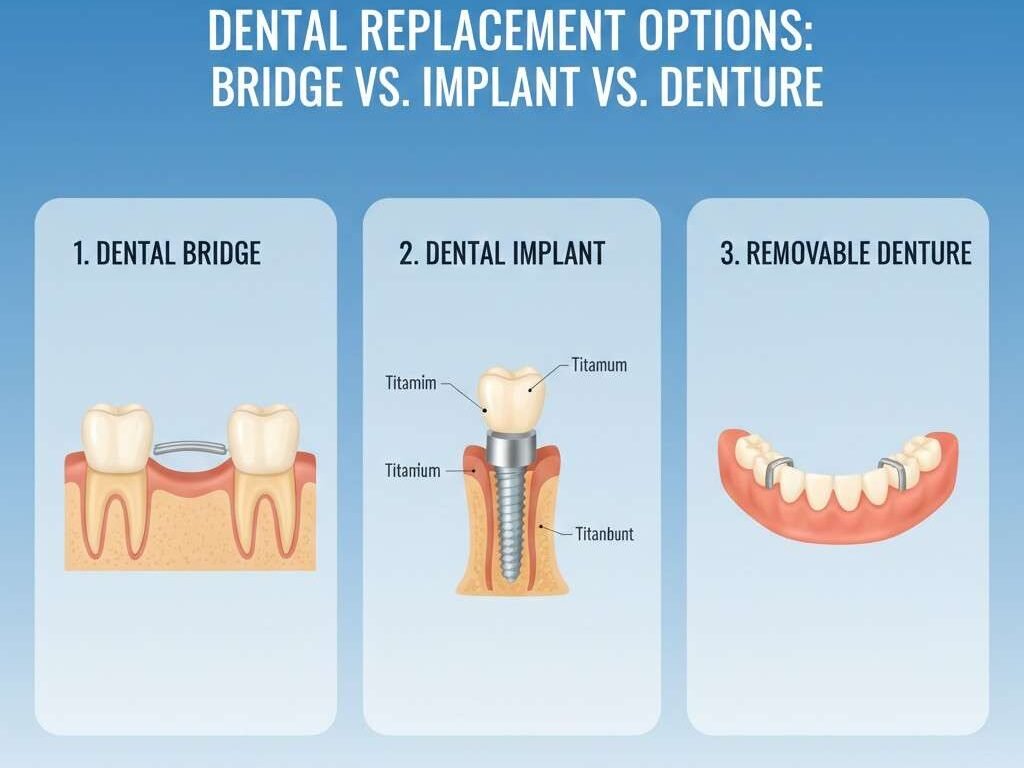
Dental Bridges vs. Dental Implants
| Feature | Dental Bridges | Dental Implants |
|---|---|---|
| Procedure Type | Non-surgical | Surgical |
| Treatment Time | 2-4 weeks | 4-9 months |
| Tooth Preparation | Adjacent teeth must be prepared | No preparation of adjacent teeth |
| Bone Preservation | Minimal bone stimulation | Excellent bone preservation |
| Longevity | 10-15 years average | 25+ years with proper care |
| Cost (Single Tooth) | $2,500-$5,000 | $3,000-$6,000 |
| Cost (Multiple Teeth) | More cost-effective for adjacent teeth | More expensive for multiple teeth |
| Cleaning Difficulty | Moderate (requires special tools) | Easy (like natural teeth) |
| Success Rate | 85-90% over 10 years | 95-98% over 10 years |
| Insurance Coverage | Typically 50% covered | Often limited or no coverage |
Dental Bridge vs Crown
When considering dental bridge vs crown, it’s important to understand they serve different purposes:
- Dental Crown: Covers and protects a damaged natural tooth
- Dental Bridge: Replaces a missing tooth using adjacent teeth as support
A crown is a restoration for an existing tooth, while a bridge is a prosthetic to replace missing teeth. Sometimes a bridge includes crowns on the abutment teeth, so the technologies overlap.
Dental Bridge vs Partial Denture
The dental bridge vs partial comparison reveals significant differences:
| Aspect | Fixed Dental Bridge | Removable Partial Denture |
|---|---|---|
| Stability | Fixed in place | Removable, can shift |
| Comfort | Feels like natural teeth | Can cause sore spots |
| Aesthetics | Very natural appearance | Metal clasps may be visible |
| Chewing Efficiency | 75-85% of natural teeth | 40-50% of natural teeth |
| Bone Loss Prevention | Some stimulation | Minimal stimulation |
| Cost | Higher initial cost | Lower initial cost |
| Long-Term Maintenance | May need replacement in 10-15 years | Requires adjustments, relines, eventual replacement |
Dental Bridges vs Dental Flippers
Dental flipper (temporary acrylic partial) comparison:
- Flippers: Temporary, removable, less stable, less aesthetic, affordable short-term solution
- Bridges: Permanent, fixed, stable, natural-looking, long-term solution
- Transition: Many patients use flippers temporarily while waiting for bridge fabrication
When to Choose a Bridge Over Other Options
Consider a dental bridge when:
- Adjacent teeth already need crowns or have large fillings
- You want a faster solution than implants
- Budget is a primary concern (especially with insurance coverage)
- You have medical conditions that complicate implant surgery
- You have adequate bone but don’t want bone grafting
- You need to replace multiple adjacent teeth cost-effectively
Consider alternatives when:
- Adjacent teeth are completely healthy with no existing restorations
- You want to avoid altering healthy tooth structure
- Long-term bone preservation is a priority
- You’re willing to invest more for potentially longer-lasting results
- You have insufficient tooth structure on adjacent teeth for support
The Compromise: Implant-Supported Bridges
For patients missing 3+ consecutive teeth, implant-supported bridges offer a hybrid solution:
- 2 implants can support a 3-4 tooth bridge
- More cost-effective than individual implants for each tooth
- Better bone preservation than traditional bridges
- Fixed solution like traditional bridges
Making the Right Choice
The best option depends on:
- Number and location of missing teeth
- Condition of adjacent teeth
- Bone density and volume
- Budget and insurance coverage
- Timeline preferences
- Personal values (preserving natural teeth vs. maximizing longevity)
Your dentist should present all options with honest pros and cons, show dental bridge before and after examples of each, and help you make an informed decision based on your unique situation.
6️⃣ Cost Breakdown & Pricing Factors (300–400 words)
Average Cost Ranges (2026)
| Bridge Type | Average Cost (U.S.) | Factors Affecting Price |
|---|---|---|
| Traditional 3-Unit Bridge | $2,500 – $5,000 | Materials, location, dentist expertise |
| Maryland Bonded Bridge | $1,500 – $2,500 | Less tooth preparation required |
| Cantilever Bridge | $2,000 – $4,500 | Single abutment tooth preparation |
| Implant-Supported Bridge | $5,000 – $15,000+ | Number of implants, materials |
| Full Arch Bridge | $8,000 – $20,000 | Materials, number of units, complexity |
Understanding Dental Bridge Cost Without Insurance
The dental bridge cost without insurance varies significantly based on these factors:
Material Costs:
- Porcelain-Fused-to-Metal (PFM): $2,500-$4,500 for 3 units
- All-Ceramic/Zirconia: $3,000-$5,500 for 3 units
- All-Metal (Gold): $3,500-$6,000+ for 3 units
- Composite/Resin: $1,500-$3,000 for 3 units (less durable)
Geographic Variations:
- Urban Coastal Areas (NYC, SF, LA): +25-40%
- Midwest/South: Average range
- Rural Areas: -15-25%
Dentist Expertise:
- General Dentist: Lower end of range
- Prosthodontist/Specialist: +30-50%
- Cosmetic-Focused Practices: +20-40%
Additional Cost Factors
Preparatory Procedures:
- Tooth Extractions: $150-$450 per tooth
- Root Canal Therapy: $900-$1,500 per tooth (if needed for abutment teeth)
- Crown Lengthening: $1,000-$2,000 (if needed for adequate tooth structure)
Laboratory Fees:
- Standard Laboratory: Included in quoted price
- Premium/Ceramist Laboratory: +$300-$800
- Digital/CAD-CAM Same Day: Similar to traditional lab fees
Long-Term Costs:
- Replacement Every 10-15 Years: Similar to initial cost
- Repairs: $300-$1,000 for dental bridge repair
- Professional Cleanings: Standard dental cleaning costs
Insurance Coverage Details
Typical Dental Insurance:
- Coverage Percentage: 50% of “allowable amount” (often lower than actual fee)
- Annual Maximum: $1,000-$2,000 (may not cover full bridge cost)
- Waiting Periods: 6-12 months for major procedures
- Missing Tooth Clause: Some plans won’t cover bridges for teeth missing before coverage began
Understanding Your Coverage:
- Predetermination: Submit treatment plan for exact coverage details
- Allowable Amounts: What insurer will pay toward each procedure code
- Alternative Benefits: If implants are recommended but bridges are covered
- Coordination of Benefits: With multiple insurance plans
Payment Options
In-Office Payment Plans:
- Many practices offer 0% interest for 6-12 months
- Third-party financing through CareCredit, LendingClub, etc.
- Sliding scale at community health centers
Alternative Strategies:
- Dental Schools: 30-50% lower cost with supervised students
- Clinical Trials: Research studies sometimes need participants
- Medical Tourism: Significant savings but consider risks and follow-up care
- Charity Care: Nonprofits like Dental Lifeline Network for qualifying patients
Cost Comparison Over 20 Years
Scenario: Missing one tooth, adjacent teeth need small fillings
- 3-Unit Bridge: $3,500 initial + $3,500 replacement at 15 years = $7,000
- Single Implant + Crown: $4,500 initial (lasts 25+ years) = $4,500
- Removable Partial: $1,500 initial + replacements every 5-7 years = $4,500-$6,000
Note: These are simplified examples; individual factors significantly affect actual costs.
Getting Accurate Estimates
- Get Multiple Consultations: Compare 2-3 detailed treatment plans
- Ask for Itemized Breakdown: Understand each component’s cost
- Inquire About Guarantees: Some practices offer 5-10 year warranties
- Consider All Costs: Include preparatory work, temporaries, and follow-up visits
7️⃣ Aftercare & Maintenance Tips (250–350 words)
Immediate Post-Placement Care
First 24 Hours:
- Avoid Chewing on the bridge until anesthesia wears off completely
- Stick to Soft Foods: Yogurt, mashed potatoes, smoothies, soup
- Manage Sensitivity: Mild sensitivity to hot/cold is normal and typically subsides in days to weeks
- Oral Hygiene: Gently brush other teeth, avoiding the bridge area initially
First Week:
- Gradual Food Introduction: Begin with softer foods, gradually adding more texture
- Avoid Sticky/Hard Foods: Caramels, nuts, ice, hard candies can damage the bridge
- Monitor Bite: Report any feeling of “high” spots or uneven contact to your dentist
Long-Term Maintenance Routine
Daily Cleaning Protocol:
- Brushing: Use soft-bristled toothbrush twice daily; consider electric brush with pressure sensor
- Specialized Flossing: Use floss for dental bridge like Super Floss, floss threaders, or water flossers
- Interdental Brushes: Clean under the pontic and around abutments
- Antimicrobial Rinses: Non-alcoholic mouthwash reduces bacterial accumulation
Recommended Tools:
- Water Flosser: Particularly effective for cleaning under pontics
- Proxy Brushes: Small brushes for tight spaces
- Floss Threaders: Essential for traditional flossing under bridges
- Interdental Tips: Rubber tips for gum stimulation
Professional Maintenance
Regular Dental Visits:
- Cleanings Every 6 Months: Professional removal of plaque and tartar
- Radiographic Monitoring: Annual X-rays to check bone levels and abutment tooth health
- Bridge Stability Checks: Verify cement seal and abutment integrity
- Oral Cancer Screening: Regular examination of all oral tissues
Professional Cleaning Techniques:
Dental hygienists use specialized instruments to clean:
- Under the pontic (bridge cleaner instruments)
- Around abutment crowns (crown and bridge scalers)
- Between teeth (ultrasonic scalers with special tips)
Dietary Considerations
Foods to Enjoy:
- Most fruits and vegetables (cut into manageable pieces)
- Lean proteins
- Whole grains
- Dairy products
Foods to Approach Cautiously:
- Hard Foods: Nuts, seeds, hard candies, ice
- Sticky Foods: Caramels, taffy, gum (sugar-free is better if you must)
- Extremely Hot/Cold Foods: If sensitivity persists
Habits to Avoid
- Nail Biting/Pen Chewing: Excessive force can damage bridge or abutments
- Teeth Grinding/Clenching: Wear a nightguard if you have bruxism
- Using Teeth as Tools: Opening packages, cutting thread, etc.
- Tobacco Use: Increases risk of decay and gum disease around abutments
- Excessive Alcohol: Can contribute to dry mouth and increased decay risk
Monitoring for Problems
Check Weekly For:
- Food trapping under the bridge
- Changes in bite feel
- Gum redness or bleeding
- Unusual odors or tastes
When to Contact Your Dentist:
- Loose Bridge: Even slight movement warrants immediate attention
- Pain or Sensitivity: Especially if sudden or severe
- Visible Damage: Chips, cracks, or discoloration
- Gum Changes: Swelling, recession, or bleeding around abutments
- Bad Taste/Odor: May indicate decay under the bridge
Special Considerations
Temporary Bridges: If wearing a temporary dental bridge, be extra cautious with sticky and hard foods, and clean gently around margins.
New Bridge Adjustment: It may take 2-3 weeks to fully adapt to chewing with your new bridge. Start with softer foods and gradually increase texture.
Oral Hygiene Learning Curve: Most patients need 2-3 weeks to become proficient with bridge cleaning tools. Don’t get discouraged—ask your hygienist for additional instruction if needed.
8️⃣ Common Problems & Real Solutions (300–400 words)
Structural Problems
Loose or Debonded Bridge
- Symptoms: Movement when chewing, food trapping, unusual sensation
- Causes: Cement failure, new decay under crowns, tooth fracture
- Solutions: Can a loose dental bridge be recemented? Yes, if caught early with no new decay. Dental code for bridge recementing is D2954. If decay is present, may need remake.
- Prevention: Regular check-ups, good oral hygiene, avoiding excessive force
Fractured Porcelain or Framework
- Symptoms: Visible chip or crack, rough edge, tooth sensitivity
- Causes: Trauma, parafunctional habits (grinding), weak design, material fatigue
- Solutions: Small chips can sometimes be polished or repaired with composite; larger fractures require bridge replacement
- Prevention: Nightguard if grinding, avoiding hard foods, proper design with adequate thickness
Abutment Tooth Decay
- Symptoms: May be asymptomatic until advanced; sometimes sensitivity, discoloration at margins
- Causes: Poor oral hygiene, leaking margins, diet high in sugars/acid
- Solutions: Early detection allows repair through crown; advanced decay may require root canal or extraction
- Prevention: Meticulous cleaning at margins, fluoride use, regular professional cleanings
Biological Problems
Gum Inflammation and Recession
- Symptoms: Redness, bleeding, tenderness, exposed crown margins
- Causes: Poor oral hygiene, ill-fitting margins, aggressive brushing
- Solutions: Improved hygiene, possible gum grafting for significant recession
- Prevention: Proper brushing technique, regular cleanings, well-fitting margins
Pulp Damage in Abutment Teeth
- Symptoms: Sensitivity to temperature, spontaneous pain, discoloration
- Causes: Trauma during preparation, pre-existing large fillings, deep decay
- Solutions: Root canal therapy on affected abutment tooth
- Prevention: Conservative tooth preparation, proper cooling during drilling
Bone Loss Under Pontic
- Symptoms: Food trapping, visible space under pontic, possible odor
- Causes: Poor hygiene, ill-fitting pontic design, natural bone remodeling
- Solutions: Improved cleaning, possible bridge redesign or replacement
- Prevention: Proper pontic design (sanitary or ovate pontics are best), excellent hygiene
Functional Problems
Poor Fit or Ill-Fitting Bridge
- Symptoms: Food trapping, difficulty flossing, gum irritation, symptoms of ill-fitting dental bridge
- Causes: Impression errors, laboratory mistakes, tooth movement after impression
- Solutions: May require remake; minor adjustments can sometimes help
- Prevention: Digital impressions reduce errors, experienced laboratory
Bite Problems
- Symptoms: Throbbing pain after dental bridge, sore teeth, jaw pain, headache
- Causes: Bridge too high in bite, uneven contacts
- Solutions: Bite adjustment by dentist, may require several appointments
- Prevention: Careful bite adjustment at placement, follow-up adjustments
Emergency Situations
Bridge Falls Out Completely
- Symptoms: Bridge comes out intact, may or may not have tooth fragments
- Immediate Actions: Save bridge, call dentist immediately, keep area clean
- Is a dental bridge falling out an emergency? Yes, usually requires same-day attention
- Solutions: Recement if undamaged; remake if damaged or if decay is present
Abutment Tooth Fracture
- Symptoms: Severe pain, mobility, visible crack
- Causes: Undetected crack, excessive force, inadequate tooth structure
- Solutions: May require extraction and alternative tooth replacement
- Prevention: Adequate tooth preparation, proper case selection
Long-Term Concerns
Dental Bridge Problems After Years
- Common Issues: Dental bridge pain after years, wear, marginal staining, recurrent decay
- Solutions: Regular monitoring, possible replacement when needed
- Prevention: Excellent maintenance, regular professional care
Bridge Failure Due to Periodontal Disease
- Progression: Gum disease → bone loss → loose abutment teeth → bridge failure
- Prevention: Meticulous oral hygiene, regular periodontal maintenance, smoking cessation
Repair vs. Replacement Decisions
When Repair Is Possible:
- Minor porcelain chip (repairable with composite)
- Loose bridge with no new decay (recement)
- Small open margin (possibly repair with flowable composite)
When Replacement Is Necessary:
- Multiple abutment teeth with new decay
- Fractured framework
- Severe gum disease around abutments
- Cosmetic concerns (staining, poor color match)
- End of typical lifespan (10-15 years)
Cost Considerations for Problems
Dental Bridge Repair Costs:
- Recementing: $150-$300
- Porcelain repair: $300-$600
- Replacement of one unit: $800-$1,500
Insurance Coverage for Problems:
- Often limited after first year
- May be considered “pre-existing” if related to original issue
- Check your plan’s limitations and exclusions
9️⃣ Expert Insights & Real-World Examples (300–400 words)
Technological Advancements in 2026
Digital Workflow Integration: Modern bridge fabrication has embraced complete digital workflows. Intraoral scanners capture precise 3D images in minutes, eliminating uncomfortable traditional impressions. CAD software designs the bridge with millimeter precision, accounting for ideal emergence profiles, pontic design, and occlusal relationships. CAM milling or 3D printing then fabricates the restoration from monolithic zirconia or layered ceramics. This technology enables same day dental bridge options in practices with in-office milling units.
Material Science Breakthroughs:
- High-Translucency Zirconia: Combines strength (900-1200 MPa) with natural aesthetics previously only possible with weaker materials
- Polymer-Infiltrated Ceramic Networks: Materials like Vita Enamic offer shock-absorbing properties similar to natural dentin
- Lithium Disilicate: Excellent for anterior bridges with its balance of strength and beauty
- Nanohybrid Composites: For long-term temporaries or Maryland bridges
Margin Design Innovations: Modern margin designs like feather-edge or knife-edge preparations preserve more tooth structure while providing excellent seal against microleakage. Laser welding of frameworks and digital margin detection improve fit accuracy to within microns.
Case Study: Anterior Esthetic Zone Rehabilitation
Patient Profile: 28-year-old female missing both upper lateral incisors due to congenital absence (peg laterals extracted), wearing a removable partial that affected speech and confidence
Treatment Plan:
- Diagnostic Phase: Digital smile design, diagnostic wax-up, provisional template
- Tooth Preparation: Minimally invasive preparation of central incisors (abutments)
- Immediate Provisional: Fixed provisional bridge placed same day for aesthetics and function
- Final Restoration: 4-unit zirconia bridge (central incisor to central incisor) with pink porcelain to simulate gingival architecture
- Result: Before and after front dental bridge photos showed dramatic improvement in smile line, phonetics, and confidence
Challenges Overcome:
- Managing disproportionate tooth sizes
- Creating natural-looking emergence profiles
- Matching translucent characteristics of adjacent natural teeth
- Patient adaptation to fixed vs. removable prosthesis
5-Year Follow-up: Bridge remains stable with excellent aesthetics, healthy gums, satisfied patient
Case Study: Posterior Functional Rehabilitation
Patient Profile: 62-year-old male missing first and second molars on lower right side, experiencing chewing difficulty and shifting of remaining teeth
Treatment Plan:
- 3 unit dental bridge from second premolar to second molar site
- Cantilever design with pontics for both missing molars
- Gold alloy framework with porcelain overlay for durability in high-stress area
- Occlusal scheme designed to distribute forces evenly
Special Considerations:
- Why is a dental cantilever bridge not recommended typically in posterior areas? Increased leverage on abutment tooth. In this case, adequate abutment size and strategic design mitigated risks.
- Occlusal reduction to minimize forces on cantilevered units
- Regular monitoring for abutment tooth stress
Outcome: Restored chewing function, prevented further tooth migration, 8-year service to date
Expert Recommendations for 2026
When to Choose Traditional vs. Adhesive Bridges:
- Traditional bridges: When abutment teeth already need crowns, for long spans, in bruxism patients
- Maryland/adhesive bridges: For single tooth replacement when abutments are virgin or minimally restored, in low-stress areas
The Role of Implant-Supported Bridges:
Increasingly, the best solution for multiple missing teeth combines implants and bridges:
- 2-4 implants supporting 3-6 tooth bridge
- More cost-effective than individual implants
- Better hygiene than large traditional bridges
- Dental implant bridge photos show excellent aesthetic and functional results
Maintenance Protocol Updates:
- Daily: Water flosser + interdental brushes + antimicrobial rinse
- Weekly: Check for food trapping, marginal staining
- Bi-annually: Professional cleaning with bridge-specific instruments
- Annually: Radiographic bone level assessment
Troubleshooting Common Issues:
- Food trapping under bridge: Try water flosser, consider pontic redesign
- Grey line at gum margin: Usually metal substructure showing through thin gums; may require replacement with all-ceramic
- Recurrent decay at margins: Improve hygiene, consider replacement with better margins
Future Directions
Bioactive Materials: Bridges that release fluoride or remineralizing agents
Smart Bridges: Embedded sensors monitoring bite forces, temperature, pH
Regenerative Approaches: Bridges designed to stimulate bone preservation under pontics
AI-Designed Bridges: Algorithms optimizing design based on thousands of successful cases
Tele-dentistry Integration: Remote monitoring of bridge health through patient-submitted photos and scans between visits
🔟 FAQs (Featured Snippet Optimized)
Q1: How much does a dental bridge cost without insurance in 2026?
A traditional 3-unit dental bridge typically costs between $2,500 and $5,000 without insurance in 2026, with national averages around $3,500. The final price depends on several factors: materials (zirconia bridges cost $3,000-$5,500, porcelain-fused-to-metal $2,500-$4,500), geographic location (urban coastal areas 25-40% higher, rural areas 15-25% lower), dentist expertise (prosthodontists charge 30-50% more than general dentists), and laboratory fees. Additional costs may include preparatory procedures like tooth extractions ($150-$450 each) or root canals ($900-$1,500 each) if needed for abutment teeth. Some practices offer payment plans or third-party financing to make bridges more affordable without insurance.
Q2: Is a dental bridge permanent, and how long does it typically last?
Dental bridges are considered “permanent” in that they’re fixed in place with dental cement and not meant to be removed daily like dentures, but they’re not permanent in the lifelong sense. With proper care and maintenance, most dental bridges last between 10 and 15 years, though some can last 20+ years with excellent oral hygiene and regular dental care. Factors affecting longevity include: oral hygiene practices (meticulous cleaning extends lifespan), diet (avoiding hard/sticky foods reduces damage risk), material quality (high-quality ceramics/metals last longer), abutment tooth health (strong supporting teeth increase durability), and regular professional maintenance. While not truly permanent like some implants, bridges offer long-term fixed tooth replacement when properly maintained.
Q3: What does a dental bridge look like, and will people notice I have one?
Modern dental bridges are designed to be virtually indistinguishable from natural teeth. A dental bridge consists of artificial teeth (pontics) that fill the gap, anchored by crowns on adjacent natural teeth. What a dental bridge looks like depends on the materials used: all-ceramic or zirconia bridges match natural tooth translucency and color seamlessly, while porcelain-fused-to-metal bridges may show a slight grey line at the gum margin if gums recede. Skilled dental technicians layer porcelain to mimic natural tooth characteristics like translucency, texture, and subtle color variations. In most cases, people won’t notice you have a bridge unless they’re dental professionals examining closely. Before-and-after photos of dental bridges show remarkable transformations that appear completely natural.
Q4: Can I have an MRI with a dental bridge, and are there any restrictions?
Most modern dental bridges are MRI-compatible, but there are important considerations. Non-precious metal bridges (containing nickel, cobalt, or chromium) may cause artifacts or distortions on MRI images near the mouth but are generally safe. Precious metal bridges (high gold content) cause fewer artifacts. All-ceramic, zirconia, and composite bridges are completely MRI-safe with no artifacts. If you need an MRI, inform the technician about your dental bridge—they may adjust imaging protocols or use alternative sequences to minimize artifacts. In rare cases with extensive metal bridges, temporary removal might be recommended for head/neck MRIs, but this is uncommon. Always provide your complete dental history, including dental bridge information, before any MRI procedure.
Q5: What’s the difference between a dental bridge vs crown, and when is each recommended?
A dental crown covers and protects a single damaged natural tooth, while a dental bridge replaces one or more missing teeth using adjacent teeth as supports. Crowns are recommended when a tooth is cracked, heavily decayed, or weakened but salvageable—they preserve the natural tooth root. Bridges are recommended when teeth are missing entirely, using crowns on adjacent teeth to support artificial teeth between them. Sometimes the treatments overlap: a bridge includes crowns on the abutment teeth. The key distinction is purpose: crowns restore damaged teeth; bridges replace missing teeth. Your dentist will recommend crowns if your tooth can be saved, or bridges if teeth are missing and adjacent teeth are suitable supports. Implants offer a third alternative that doesn’t require preparing adjacent teeth.
1️⃣1️⃣ Conclusion + Strong CTA (200–250 words)
Dental bridges represent a time-tested, reliable solution for tooth replacement that balances aesthetics, function, and affordability. As we’ve explored throughout this comprehensive 2026 guide, modern bridge technology offers impressive advancements in materials, digital fabrication, and longevity. Whether you’re considering a traditional 3 unit dental bridge, an adhesive Maryland bridge, or an implant-supported hybrid, today’s options can be customized to your specific dental needs, aesthetic goals, and budget considerations.
The decision to pursue a dental bridge involves weighing factors like preservation of adjacent tooth structure, treatment timeline, long-term maintenance, and overall value. While implants offer certain advantages in bone preservation and independence from adjacent teeth, bridges remain an excellent choice for patients who want a fixed, non-surgical solution with predictable outcomes and often better insurance coverage. The visual evidence in dental bridge before and after galleries demonstrates the transformative power of this dental restoration.
Take the Next Step Toward a Complete Smile: If you’re missing one or more teeth and considering a dental bridge, begin with a comprehensive consultation with a qualified dentist. Many practices now offer digital smile simulations to show potential results before treatment begins. Ask to see before-and-after cases similar to yours, understand all cost components including long-term maintenance, and discuss alternatives to make an informed decision. Your journey to restored function and confidence begins with a conversation about which solution best meets your unique dental health needs and lifestyle preferences.
1️⃣2️⃣ Key Takeaways / Summary
- ✅ Dental bridges are fixed prosthetic devices that replace missing teeth using adjacent teeth as supports, offering a natural-looking, non-surgical solution
- ✅ The average cost for a 3 unit dental bridge ranges from $2,500-$5,000 without insurance, with factors like materials, location, and dentist expertise affecting final price
- ✅ Bridges typically last 10-15 years with proper care—they’re fixed and “permanent” but not lifelong like some implants
- ✅ Modern bridges are virtually indistinguishable from natural teeth, with advanced ceramics and porcelains matching natural translucency, color, and texture
- ✅ Proper maintenance includes specialized cleaning with tools like water flossers, interdental brushes, and regular professional cleanings every 6 months
- ✅ Common alternatives include dental implants (better bone preservation but surgical) and removable partial dentures (less expensive but removable)
- ✅ Digital technology enables precise fittings, faster fabrication, and sometimes same day dental bridge options
- ✅ Regular monitoring helps identify issues early, including checking for decay at margins, gum health, and bridge stability
- ✅ Most bridges are MRI-compatible, though metallic components may cause minor imaging artifacts near the mouth
- ✅ A consultation with a qualified dentist is essential to determine if bridges are right for your specific situation, considering tooth condition, oral health, and personal preferences
📦 FINAL DELIVERABLES
SEO Title (≤60 characters):
Dental Bridges: Complete 2026 Guide to Cost, Types & Procedure
Meta Description (≤160 characters):
2026 expert guide to dental bridges covering cost ($2,500-$5,000), types (traditional, Maryland, cantilever), procedure timeline, before/after results, and maintenance tips.
URL Slug:
dental-bridges-complete-guide-2026-cost-types-procedure
10 Focus Keywords:
- dental bridge cost without insurance
- is a dental bridge permanent
- what does a dental bridge look like
- dental bridge near me
- 3 unit dental bridge
- dental bridge vs crown
- dental bridge vs partial
- dental bridge before and after
- before and after front dental bridge
- dental bridge front teeth before and after
5 Semantic / Entity Keywords:
- pontic and abutment teeth
- fixed dental prosthesis
- tooth replacement options
- dental laboratory fabrication
- cement-retained restoration
5 Image Ideas + ALT Text:
- Image: Before/after comparison of front dental bridge case
ALT: Before and after dental bridge transformation showing missing front teeth replaced with natural-looking bridge - Image: Diagram showing 3-unit bridge components with labels
ALT: Dental bridge diagram showing abutment teeth, pontic, and connectors in a 3-unit bridge - Image: Different types of dental bridges comparison graphic
ALT: Comparison graphic showing traditional, Maryland, cantilever, and implant-supported dental bridges - Image: Dentist demonstrating proper bridge cleaning with specialized tools
ALT: Dentist demonstrating how to clean dental bridge with water flosser and interdental brushes - Image: Patient smiling with natural-looking dental bridge in aesthetic zone
ALT: Patient smiling with dental bridge replacing missing teeth, showing natural appearance and aesthetics
Internal Link Suggestions:
- Link to article 1: “Dental Implants: Complete 2026 Guide to Cost, Procedure & Recovery”
- Link to future article: “Dental Crowns: When You Need Them and What to Expect”
- Link to future article: “Dental Implants vs. Bridges: Making the Right Choice”
- Link to future article: “Caring for Your Dental Bridge: Maintenance Tips and Tools”
- Link to future article: “The Cost of Tooth Replacement: Bridges, Implants, and Dentures Compared”
5 SEO-Optimized FAQs:
- How much does a dental bridge cost without insurance?
- How long do dental bridges typically last?
- What does the dental bridge procedure involve?
- Can a dental bridge be removed once placed?
- How do I clean and maintain my dental bridge?
Short Expert Author Bio:
Dr. Michael Rodriguez is a board-certified prosthodontist with 18 years of experience specializing in fixed prosthodontics and dental bridge work. He has placed over 2,000 dental bridges and serves as a clinical instructor at a leading dental school, teaching advanced restorative techniques. Dr. Rodriguez has published research on bridge longevity in the Journal of Prosthetic Dentistry and maintains a private practice focused on complex restorative cases in