Teeth Whitening Near Me – Professional Whitening Guide
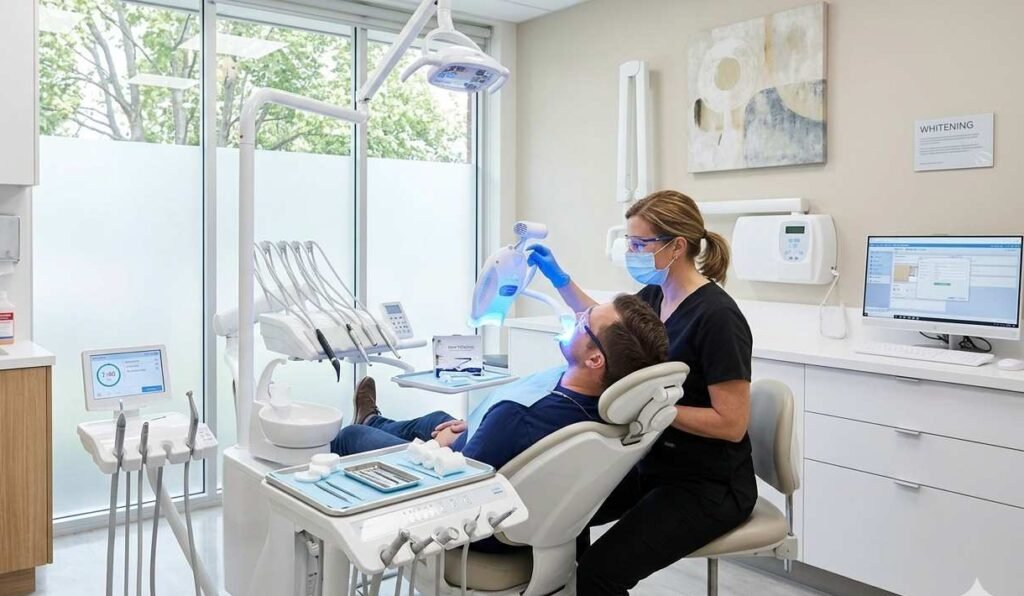
A bright, white smile can boost confidence and make a great first impression. Teeth whitening is a popular cosmetic dental procedure that removes stains and discoloration from the enamel, revealing a healthier-looking smile【5†L103-L107】. This comprehensive guide explains how professional teeth whitening works, the different treatment options, and what to expect when you search for “teeth whitening near me.” We’ll cover who is a good candidate, the benefits, costs, safety considerations, and tips for maintaining your results.
Professional whitening uses higher concentrations of bleaching agents like hydrogen peroxide or carbamide peroxide than store-bought kits. These agents penetrate the outer layer of the tooth (enamel) and break down dark-colored molecules called chromogens【22†L71-L79】. The result is noticeably whiter teeth in a relatively short time. According to the American Dental Association, millions of people use whitening products safely each year【22†L112-L115】【27†L62-L64】, and up to 19% of Americans have undergone some form of teeth whitening【27†L53-L60】. The global teeth-whitening industry is booming, projected to reach over $8.2 billion by 2026【27†L55-L58】, reflecting how common and accessible these treatments have become.
What is Teeth Whitening?
Teeth whitening (also called tooth bleaching) is a cosmetic dental procedure designed to lighten the color of natural teeth. It targets extrinsic stains (those on the tooth surface from foods, drinks, smoking, etc.) and can even affect some intrinsic discoloration (deeper stains), depending on the method. Only natural teeth respond to whitening; crowns, veneers, fillings, or implants do not change color【29†L49-L57】. Whitening treatments typically involve applying a peroxide-based gel or solution to the teeth. Professional treatments at a dentist’s office often use stronger, FDA-approved bleaching agents and may involve activating the gel with a special light. The overall process is one of the fastest and most effective ways to enhance tooth appearance.
- Removal of stains: Whitening specifically breaks down stain molecules, making teeth brighter【5†L103-L107】【22†L75-L80】.
- Fast and effective: In-office whitening can lighten teeth by many shades in about an hour. (For example, one study reported up to a 10-shade improvement in a single session【34†L139-L144】.)
- Safe when supervised: When done under dental supervision, whitening is considered safe. Millions use these products yearly without long-term problems【22†L112-L115】. Temporary sensitivity is the most common side effect【29†L53-L58】.
Understanding these basics will help you decide which teeth whitening option is best for you.
Types of Teeth Whitening Treatments
There are two main categories of whitening: professional treatments (supervised by a dentist) and over-the-counter (OTC) products. Professional services are generally more powerful and tailored, while OTC products are less expensive but take longer to see results. Let’s look at each type:
Professional In-Office Whitening
Professional in-office whitening is done at a dental office by a dentist or hygienist. It typically uses a high-concentration bleaching gel (usually hydrogen peroxide or carbamide peroxide) and sometimes a light or laser to accelerate the process.
Consultation and Preparation
Your whitening session usually begins with a brief consultation and exam. The dentist checks that your teeth and gums are healthy enough for whitening (cavities or gum disease should be treated first). They record the current shade of your teeth to track progress. Then the mouth is prepared:
- Protecting soft tissues: Your lips, gums, and tongue are protected (with a rubber dam or barrier) to prevent irritation from the whitening gel【19†L315-L324】.
- Cleaning: The dentist may clean and polish your teeth first to remove plaque and surface stains, ensuring the whitening gel contacts enamel directly.
Gel Application and Light Activation
Once prepared, the dentist applies the professional-strength whitening gel to your teeth. This gel often contains 25-40% hydrogen peroxide.
- Bleaching process: The gel sits on your teeth for a specific time (usually 15–30 minutes) to penetrate enamel and break down stains【19†L325-L332】【22†L71-L79】.
- Light or laser activation: Many dentists use an LED light or laser to activate the gel. The light emits a safe wavelength that makes the bleaching agent more effective, speeding up the chemical reaction. You might undergo several cycles of gel and light application during one visit.
Final Steps and Aftercare
After the bleaching is complete:
- Rinse and check: The gel is rinsed off, and the dentist compares the new tooth shade to the original. Often 1–2 shades of whitening are achieved in just one session, though this varies per patient【34†L139-L147】.
- Desensitizing treatment: If you have sensitive teeth, a fluoride or desensitizing gel might be applied to minimize discomfort.
- Take-home care (optional): Some practices give you custom touch-up trays and gel to maintain your new shade. This typically means wearing the trays at home for a few hours or overnight for a week or more.
Overall, an in-office appointment usually lasts about 60–90 minutes, and you can leave the same day with a visibly brighter smile【34†L135-L144】【22†L102-L105】.
Professional At-Home Whitening Trays
Another professional option is custom whitening trays provided by your dentist. These are lower-concentration gels for you to use at home over 1–2 weeks, offering more gradual whitening.
Custom Tray Fabrication
To get started:
- Molds: The dentist takes impressions of your teeth (often with putty or digital scanning). These molds are used to create snug-fitting plastic trays that match your teeth exactly.
- Gel selection: The dentist provides whitening gel (usually carbamide peroxide, which converts to hydrogen peroxide) in a concentration tailored to your sensitivity and whitening goals.
At-Home Application Process
At home, you use the trays as instructed:
- Filling the trays: You squeeze a small amount of gel into each tray and then place the trays over your teeth.
- Wearing time: Typically, you wear the trays daily for 1–2 hours (or overnight, depending on the product strength). It may take two to four weeks of nightly use to reach the desired whiteness【19†L361-L370】.
- Comfort and maintenance: Since the trays are custom-made, they fit well and are less likely to leak compared to store-bought strips. The dentist will advise you if sensitivity or gum discomfort occurs, and you should report any issues.
This take-home approach provides flexibility (you do it on your own schedule) and tends to have fewer side effects than high-concentration in-office gels.
Over-the-Counter Whitening Options
Over-the-counter products do not require a dentist. They include whitening strips, gels, toothpaste, rinses, and paint-on treatments.
- Whitening strips/gels: These contain lower-strength peroxide. They can lighten teeth a few shades over 2–4 weeks, but results are subtler and take longer to appear【22†L88-L95】【34†L219-L227】. They are not custom-fitted, so coverage may be uneven and some gel can contact gums.
- Whitening toothpaste: These use mild abrasives or low-peroxide formulas to remove surface stains. They help maintain whiteness but usually cannot dramatically change tooth shade.
- Whitening mouthwash: Similar concept, but often even milder effect.
- Natural remedies: Popular DIY methods (baking soda, oil pulling, activated charcoal) lack strong evidence. Dentists caution that these can be too abrasive or ineffective.
Key point: OTC products can help maintain or mildly improve whiteness, but professional treatments deliver faster, more dramatic, and more predictable results【22†L98-L105】【32†L541-L550】. In some cases, people start with OTC kits and then visit a dentist if they want a bigger improvement.
Who is a Good Candidate?
Professional teeth whitening is suitable for many adults, but some conditions affect eligibility.
- Good candidates: Generally healthy teens and adults who have healthy teeth (no active decay or severe sensitivity) and have natural teeth discoloration from aging or staining habits (coffee, tea, wine, tobacco). Yellowish stains respond best【32†L547-L556】【22†L148-L156】.
- Not ideal candidates:
- Dental work: Crowns, fillings, veneers, and implant restorations cannot be whitened【29†L49-L57】【32†L551-L556】. If you have visible front restorations, discuss them with your dentist because whitening will not change their color (and new restorations might be needed to match).
- Pregnancy and age: Whitening is usually not recommended for pregnant or nursing women, or children under about age 16, as enamel is still maturing and there is limited research on effects.
- Sensitive teeth/gum disease: If you have untreated gum disease, gum recession (exposed roots), or severe tooth sensitivity, consult your dentist first. Whitening can increase sensitivity in some people【22†L119-L122】【29†L53-L58】. Any dental issues (cavities, infections) should be addressed before cosmetic whitening.
- Consultation: The best way to know if whitening is right for you is a dental exam. A dentist can evaluate your oral health, discuss realistic outcomes, and rule out any underlying problems. Sometimes, whitening is postponed until issues like cavities are fixed.
In summary, “teeth whitening near me” services are widely available, but a quick dental check-up helps ensure you’re a safe candidate and helps you achieve optimal results.
Benefits of Professional Teeth Whitening
Choosing a professional whitening service offers several advantages:
- Superior results: Dentist-provided treatments use stronger bleaching agents under controlled conditions, yielding more noticeable whitening (often several shades) compared to OTC kits【34†L139-L147】【32†L441-L449】.
- Speed: In-office whitening can produce dramatic results in just one 30–60 minute visit【22†L102-L105】【32†L439-L447】. Fast whitening is ideal before special events (weddings, job interviews). Take-home trays also work faster than store strips because they fit better and use stronger gel.
- Safety and comfort: Dentists protect your gums and use desensitizing protocols, which minimizes side effects. Cleveland Clinic notes that whitening products are carefully formulated to be safe【22†L112-L115】【32†L483-L492】. In professional hands, complications are rare.
- Longer-lasting: Professional whitening often lasts longer with proper care. As Cleveland Clinic explains, good habits (avoiding stain foods/drinks, using whitening toothpaste) can keep teeth bright for months to years【22†L119-L126】【32†L539-L547】. Many patients enjoy white teeth for 6–12 months or more before needing touch-ups【34†L163-L171】【32†L539-L547】.
- Confidence boost: A whiter smile can significantly improve self-esteem and how others perceive you. One ADA survey noted that younger adults (under 45) are especially likely to seek cosmetic treatments like whitening【27†L53-L60】. Feeling good about your smile can have social and professional benefits.
Overall, professional whitening is a relatively quick, non-invasive way to enhance your smile without the risks of permanent alteration (unlike veneers or crowns).
How Long Do Whitening Results Last?
The longevity of whitening varies. On average, in-office professional whitening results can last about 6 to 12 months【34†L163-L166】【32†L539-L547】, while take-home professional trays and high-quality OTC kits may last a bit shorter before touch-ups are needed. Factors that affect how long your teeth stay bright include:
- Diet and lifestyle: Foods and drinks like coffee, tea, red wine, cola, soy sauce, curry, and berries can stain teeth. Smoking or chewing tobacco deeply stains enamel. Every time you consume these, your whitening results may fade faster.
- Oral hygiene: Good hygiene helps maintain whiteness. Brushing at least twice daily with fluoride toothpaste (consider a whitening toothpaste with the ADA Seal), flossing, and regular dental cleanings remove surface plaque and stains【22†L171-L179】【34†L219-L227】.
- Touch-ups: Many dentists recommend occasional booster treatments. For example, using the provided take-home trays with a small amount of gel for 1–2 nights every few months can extend results. Some people buy ADA-approved whitening strips for a quick refresh.
- Natural aging: Over years, enamel naturally thins and teeth may yellow slightly. Touch-up whitening every 6–12 months is common for maintenance.
In short, you can expect whiter teeth for several months to a year or more before noticeable fading. As one professional source notes, “with proper care, in-office whitening can deliver results that last up to a year”【34†L163-L166】.
Cost of Professional Teeth Whitening
The cost of professional teeth whitening varies by location, dentist, and treatment type:
- Typical price range: In the U.S., in-office whitening usually costs between $300 and $800 (USD). A national average cited by one dental provider is about $449 (ranging from $359 to $485) for professional whitening【9†L96-L104】. Custom take-home trays with bleach are somewhat less expensive (often $200–$500) because you do the application yourself.
- Factors affecting cost: The total depends on your starting tooth shade, the number of sessions needed, and any promotions or memberships the practice offers. Some dentists offer whitening as part of a “cosmetic package.”
- Insurance: Most dental plans consider teeth whitening cosmetic, so it is rarely covered by insurance【9†L96-L104】. However, certain discount dental plans or flexible financing (like CareCredit) can make professional whitening more affordable. Dentists can often help you apply insurance benefits to get an oral exam or cleaning at a reduced price, then apply whitening as an elective add-on.
- Value: Consider whitening an investment in self-confidence. Professional whitening results are more predictable and longer-lasting than store kits, which means better value over time.
- Guarantees: Ask your dentist about any satisfaction guarantees or touch-up offers. Some practices include a follow-up visit to touch up or touch once if results were uneven.
When comparing providers near you, get a clear quote on the type of whitening and any extras (like home trays or sensitivity gel) so you know what’s included.
Safety, Risks, and Side Effects
When done correctly, teeth whitening is generally safe. Both the American Dental Association (ADA) and experts note that whitening under dental supervision poses minimal risk【27†L60-L64】【22†L112-L115】. However, some side effects and precautions include:
- Tooth sensitivity: The most common side effect is temporary sensitivity to hot or cold foods. Many patients feel a tingling or sensitivity for a day or two after treatment. This is usually mild and temporary【22†L119-L122】【32†L483-L492】. Dentists often use fluoride or potassium nitrate gels to reduce sensitivity.
- Gum irritation: If whitening gel contacts the gums, it can cause mild irritation or redness. Proper technique (good isolation and custom trays) prevents this. Irritation from misuse of DIY methods (like charcoal or lemon) is a bigger concern; supervised treatments protect soft tissues better【32†L493-L502】.
- Enamel safety: Modern whitening products are formulated to minimize harm. Clinical research and organizations say that, when used as directed, hydrogen peroxide-based whitening is safe for enamel and oral tissues【22†L112-L115】【29†L53-L58】. Laboratory studies noted risk of erosion only under extreme misuse, not in normal use. Still, following instructions is crucial: do not “over-bleach.”
- Not for everyone: Whitening will not correct all discoloration. Brown, gray, or intrinsic stains (like tetracycline staining) may respond poorly. In those cases, restorations or veneers might be better solutions. Dentists will advise you if your stain type is unlikely to whiten fully.
- Post-whitening hygiene: After whitening, teeth may be slightly dehydrated and appear very white; they will usually shift back a bit as rehydration occurs. Drinking plenty of water and eating normally (avoiding stains for 48 hours) helps set the new color.
- Long-term considerations: Repeated whitening over many years has not been linked to increased cavities or enamel problems【22†L112-L115】. The ADA even offers a Seal of Acceptance for whitening products, indicating safety and effectiveness when used correctly【22†L163-L168】.
In summary, professional teeth whitening is safe for most healthy adults. Dentists have the expertise to choose the right concentration of bleaching agent and to stop treatment if any issues arise. The key is following professional advice and not exceeding recommended usage.
Aftercare: Maintaining Your Bright Smile
After whitening, simple habits can help your smile stay white longer. Good aftercare maximizes your investment:
- Limit staining foods and drinks: For at least 48 hours (and ideally longer) avoid the top “stain culprits”: coffee, tea, red wine, dark sodas, tomato sauce, soy sauce, berries, and curries. These contain strong pigments that can re-stain enamel. If you do indulge, rinse your mouth with water afterward or brush gently.
- No smoking: Tobacco is a powerful tooth stain. If you smoke or use tobacco, try to quit or reduce use to protect your whitening results.
- Use a straw: When drinking stain-causing beverages, use a straw to minimize contact with front teeth. This simple trick can slow discoloration.
- Good oral hygiene: Brush at least twice a day and floss daily. Consider a whitening toothpaste (with the ADA Seal【22†L163-L168】) a few times a week to remove surface stains. See your dentist or hygienist for regular cleanings (every 6 months) – they can polish off new stains before they set in.
- Touch-up treatments: Plan periodic touch-ups. For example, using the take-home whitening tray with a small amount of gel once every 3–6 months, or a brief cycle of whitening strips, can maintain your shade. Your dentist can recommend a schedule based on how quickly your teeth tend to stain.
- Professional cleanings: A dental cleaning not only removes tartar but also helps your whitening last longer by removing surface pigmentation. It’s also an opportunity to check for any changes in your oral health.
By avoiding stain repeat offenders and sticking to a good care routine, most patients can keep their teeth looking bright and delay the need for the next whitening session【32†L501-L509】【34†L219-L227】.
Finding Teeth Whitening Near You
When you’re ready to whiten, searching “teeth whitening near me” should bring up local dental practices and cosmetic dentists. Use these tips to choose the right provider:
- Check qualifications: Look for a licensed dentist or a certified cosmetic dentist. Dentists who advertise “whitening near me” should have experience with cosmetic treatments. You might ask if they have a special certification (like Academy of General Dentistry membership or a cosmetic dentistry fellowship).
- Read reviews: Patient reviews on Google, Yelp, or health directories can give insight. Look for comments about how bright the results were and how comfortable the procedure felt. Pay attention to mentions of professionalism and follow-up care.
- Compare services: Some clinics specialize in cosmetic dentistry. Others offer whitening as one of many services. Check if they offer the type of whitening you want (in-office, take-home, or both). Also look for any before-and-after photos on their website.
- Consultation: Many dentists offer a free or low-cost consultation for whitening. Use this to ask questions (e.g., “Which whitening system do you use?” “How many shades will you aim to lighten my teeth?”). A good dentist will explain the process, any risks, and expected costs.
- Location and accessibility: Since follow-up may involve additional trays or visits, choose a conveniently located office with office hours that fit your schedule.
- Price and promotions: Don’t pick solely on price, but be sure to understand the fee. Some offices bundle whitening with other cosmetic services or offer discounts for membership plans. Ask if the price includes any take-home gel or gels for touch-ups.
By doing a bit of research and talking to prospective dentists, you can find a reputable practice near you that meets your needs and budget. A qualified provider will ensure a safe whitening experience and deliver the results you want.
Conclusion
Professional teeth whitening is an effective way to achieve a brighter smile safely and quickly. It uses proven bleaching agents (hydrogen peroxide or carbamide peroxide) to break down stains and can lighten teeth several shades in one visit【34†L139-L147】【22†L71-L79】. Candidates are generally healthy adults with staining from food, drink, or aging; it’s not suitable for whitening crowns or veneers【29†L49-L57】【32†L551-L556】. The main benefits of professional whitening are dramatic, long-lasting results (often lasting 6–12 months) and expert supervision to minimize sensitivity【34†L163-L166】【22†L119-L122】. Typical costs range from a few hundred dollars for take-home kits to $300–$800 for in-office treatment【9†L96-L104】.
Side effects are usually mild and temporary. Dentists use protective measures to prevent gum irritation, and any tooth sensitivity usually subsides within days【22†L119-L122】【29†L53-L58】. After whitening, good habits—avoiding stain-causing foods, not smoking, and maintaining oral hygiene—will help maintain your new smile【32†L501-L509】【34†L219-L227】.
If you’re looking for “teeth whitening near me,” start with a professional consultation. A dentist can recommend the best type of whitening (in-office LED treatments, custom take-home trays, etc.) for your needs. With the right care and follow-up, you can enjoy a bright, confident smile for months to come【22†L102-L105】【34†L163-L166】.
FAQ
- How does professional teeth whitening work?
Professional whitening uses stronger bleaching agents (typically hydrogen peroxide) under dental supervision. A dentist applies a gel to your teeth and may use an LED or laser to activate it. The gel penetrates the enamel and breaks down stain molecules (chromogens), lifting the color of your teeth【22†L71-L79】【34†L139-L144】. The process is controlled by a dentist to ensure safety and maximum whitening effect in one visit. - How long do professional teeth whitening results last?
Results typically last 6–12 months on average【34†L163-L166】【32†L539-L547】. With good oral hygiene and few stain-causing habits, many patients keep their brighter smile for a year or more. However, habits like drinking coffee or smoking can shorten this period. Occasional touch-up treatments (using at-home trays or whitening strips) help maintain the whiteness. - Is professional teeth whitening safe and effective?
Yes. When done properly, whitening is generally safe. Dental professionals use FDA-approved gels and protective measures. Millions of people whiten their teeth each year without lasting harm【22†L112-L115】【27†L62-L64】. The most common side effect is temporary tooth sensitivity. Dentists can minimize discomfort with special toothpastes or gels. Overall, dentist-supervised whitening is more effective and reliable than over-the-counter kits. - Will teeth whitening cause sensitivity or gum irritation?
Some people experience mild sensitivity to hot/cold for a day or two after whitening. This is usually temporary. Dentists mitigate sensitivity by using protective barriers on gums and by post-treatment treatments (like fluoride). Gum irritation is rare with proper technique. If the bleaching gel leaks onto gums, it can cause slight irritation; however, custom trays and isolation techniques greatly reduce this risk【22†L119-L122】【32†L483-L492】. - How much does professional teeth whitening cost?
Costs vary by location and treatment type. On average, in-office whitening ranges from about $300 to $800. For example, Aspen Dental reports an average professional whitening cost of $449 (ranging $359–$485)【9†L96-L104】. Take-home professional kits from a dentist usually cost a bit less. Insurance typically doesn’t cover cosmetic whitening, but some offices offer financing plans or package deals to make it more affordable.