Dental Health Guide
Cavity Between Teeth: Signs, Causes & How Dentists Fix It
A complete, dentist-informed guide to spotting, understanding, and treating a cavity between teeth — before it becomes a bigger (and more expensive) problem.
A cavity between teeth — also called an interproximal or interdental cavity — is one of the most common types of tooth decay, and also one of the easiest to miss. Because it forms in the tight space where two teeth touch, it’s usually invisible to the naked eye until it has already caused noticeable damage.
According to the World Health Organization, untreated tooth decay affects roughly 2 billion adults worldwide, making it one of the most widespread health conditions on the planet. A large share of that decay starts quietly, between the teeth, long before pain ever shows up.
This guide walks through what a cavity between teeth looks like, the early warning signs, what causes it, how dentists diagnose and fill it, and what you can realistically do at home to protect your teeth going forward.
Quick answer: Yes, you can absolutely get a cavity between teeth — in fact, it’s one of the most common places for decay to start, because a toothbrush can’t reach that tight contact point. The only way to truly fix an existing cavity is a dental filling; home remedies can only help prevent or slow early-stage decay, not repair it.
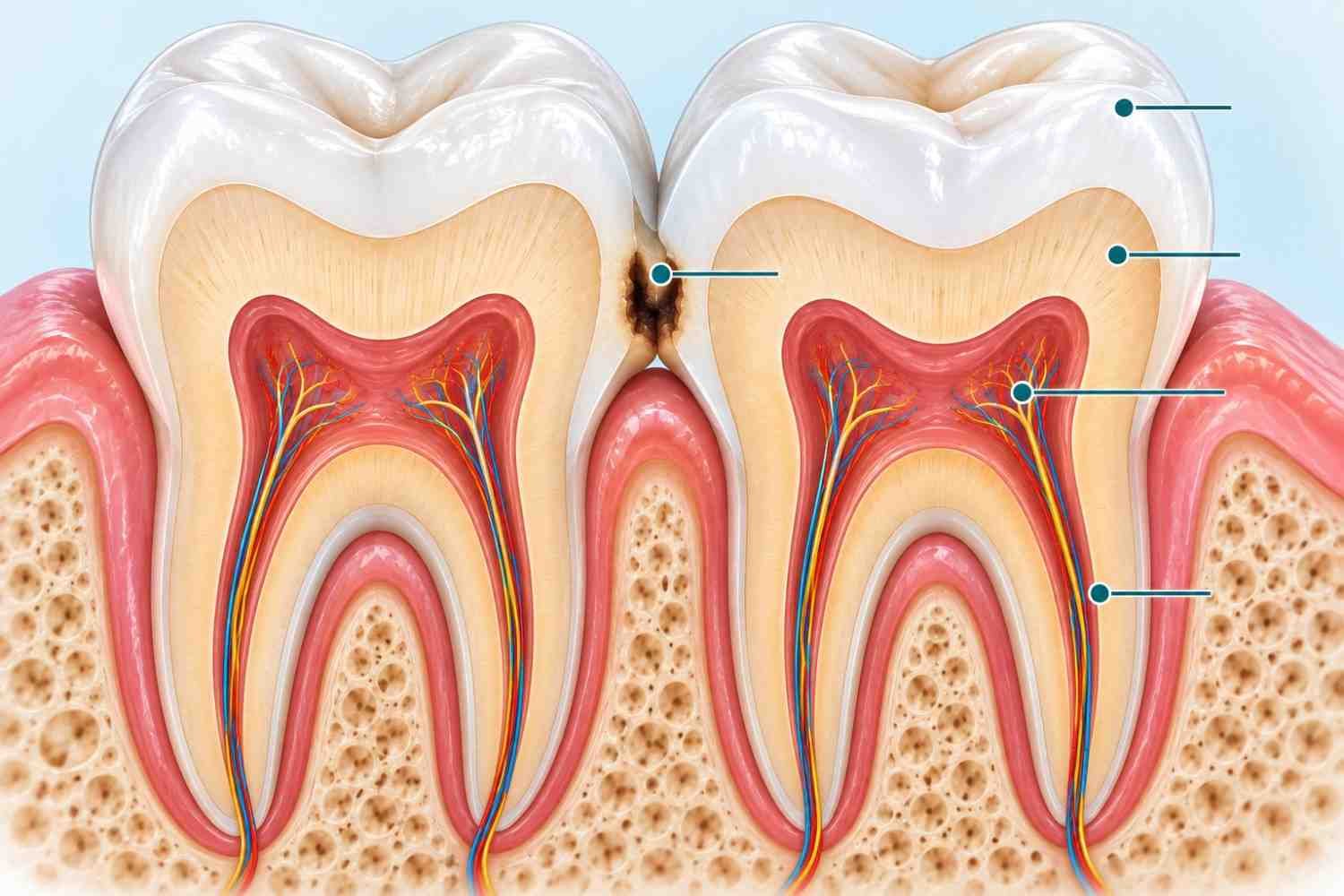
What Is a Cavity Between Teeth?
A cavity between teeth develops on the interproximal surface — the side of the tooth that touches its neighbor. Dentists sometimes call this an interproximal cavity or interdental cavity. Because a toothbrush’s bristles physically cannot reach this contact point, plaque and food debris build up there far more easily than on the flat, visible surfaces of the tooth.
Over time, bacteria in that trapped plaque feed on sugars and starches and release acid. That acid slowly dissolves the tooth’s enamel, creating what is essentially a small hole — the tooth cavity between teeth that most people never see coming until a dentist points it out on an X-ray.
What Does a Cavity Between Teeth Look Like?
Because interdental cavities form out of direct sight, most people never actually see the hole itself. What they notice instead are secondary clues:
- A grey, brown, or dark shadow visible through the enamel when light hits the tooth at certain angles
- A rough or slightly jagged edge you can feel with your tongue between two teeth
- Food that keeps getting stuck in the exact same spot, every single day
- A visible chip or notch near the gum line between two teeth
In its earliest stage, a small cavity between teeth may only appear as a faint white or chalky spot — a sign the enamel is starting to demineralize but hasn’t fully broken down yet. This early stage is the only point where the process can sometimes be reversed with fluoride and better hygiene, rather than a filling.
Signs and Symptoms of a Cavity Between Teeth
Recognizing the signs of a cavity between teeth early can save you from a root canal down the line. Watch for:
- Sensitivity to sweet, hot, or cold foods — a sharp, short twinge rather than lingering pain
- Dull ache when biting or chewing on that side of the mouth
- Persistent bad breath or a bad taste that doesn’t go away after brushing
- Floss that shreds or catches repeatedly in one exact spot
- Visible dark triangle or shadow between two teeth in photos or the mirror
Cavity Between Teeth Near the Gum Line
A cavity between teeth at the gum line is especially common in adults, because the gums naturally recede slightly over time, exposing softer root surfaces that decay faster than enamel. This type often causes gum tenderness or slight bleeding in that specific spot in addition to the usual sensitivity.
Early Cavity Between Teeth Warning Signs
An early cavity between teeth rarely hurts. The most reliable early sign is a change in how the tooth feels to your tongue, or a chalky white spot near the contact point that a dentist can confirm with a bitewing X-ray — the standard tool for catching interproximal decay before it’s visible.
Hidden Cavity Between Teeth — Why It’s So Easy to Miss
A hidden cavity between teeth can grow for a year or more without any pain at all, because the nerve inside the tooth isn’t affected until decay reaches the inner dentin layer. This is exactly why dentists recommend X-rays every 12–24 months even for people who “never have problems” — visual exams alone miss most interproximal decay.
What Causes Cavities Between Teeth?
The core cause is the same as any cavity — acid-producing bacteria feeding on sugar — but a few factors make the space between teeth especially high-risk:
- Infrequent or incorrect flossing — brushing alone misses roughly 40% of each tooth’s surface
- Tightly spaced teeth that trap food and are hard to clean between
- Frequent snacking or sipping sugary drinks, which keeps acid levels elevated throughout the day
- Dry mouth, which reduces saliva’s natural ability to neutralize acid and rinse away debris
- Old, worn, or overhanging fillings that create new gaps where plaque can hide
How to Know If You Have a Cavity Between Teeth
At-Home Checks
While nothing replaces a professional exam, a few simple checks can raise a flag at home:
- Floss gently between each pair of teeth — if the floss frays, tears, or gets stuck at one specific point every time, that’s worth mentioning to your dentist
- Run your tongue slowly along each contact point, feeling for roughness or a small notch
- Note any spot where sweet or cold food consistently causes a quick zing of sensitivity
When to See a Dentist
Book an appointment if you notice any of the signs above, or simply if it’s been more than a year since your last checkup and bitewing X-rays. The American Dental Association notes that X-rays remain the most reliable way to catch interproximal decay before symptoms appear.
Small Cavity vs. Large Cavity Between Teeth
Not every interdental cavity needs the same treatment. Here’s how severity typically breaks down:
| Stage | What It Looks Like | Typical Symptoms | Usual Treatment |
|---|---|---|---|
| Early / white spot | Chalky white patch, enamel intact | None, or very mild sensitivity | Fluoride treatment, improved flossing |
| Small cavity between teeth | Small hole through enamel | Occasional sweet/cold sensitivity | Composite (tooth-colored) filling |
| Moderate decay | Reaches into dentin layer | Noticeable pain when chewing | Larger filling or inlay |
| Advanced decay | Reaches the tooth’s nerve | Constant, throbbing pain | Root canal, possibly a crown |
How Do They Fix a Cavity Between Teeth?
Once decay has broken through the enamel, a filling is the standard and most effective fix. Here’s what the process generally involves.
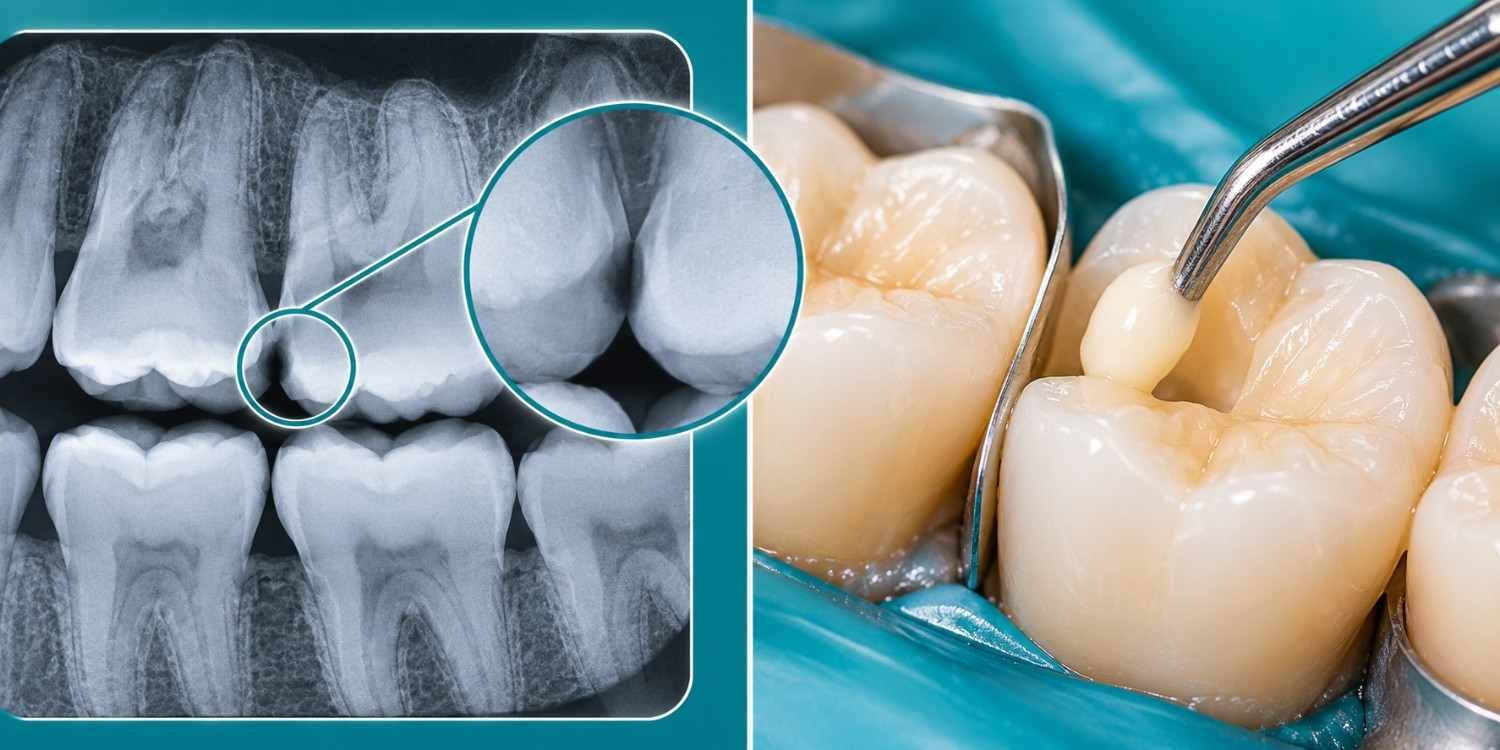
Filling a Cavity Between Teeth, Step by Step
- Numbing: The dentist applies a local anesthetic near the affected tooth.
- Removing decay: A small drill or laser removes the decayed portion of the tooth.
- Shaping the space: Because the cavity sits between two teeth, the dentist places a thin metal or plastic strip (a matrix band) to rebuild the tooth’s natural contour and contact point.
- Filling material: A tooth-colored composite resin is layered in and hardened with a curing light — this is the modern standard for interproximal fillings.
- Polishing and bite check: The filling is smoothed and your bite is checked so nothing feels high or uneven.
The entire appointment for filling a cavity between teeth typically takes 20–40 minutes per tooth, and most people return to eating normally within a couple of hours once the numbness wears off.
When a Filling Isn’t Enough
If decay has spread deep enough to reach the nerve, a filling alone won’t resolve the pain. At that stage, treatment usually escalates to a root canal, sometimes followed by a crown to restore the tooth’s strength.
Can You Fix a Cavity Between Teeth at Home?
Not once a hole has actually formed. No rinse, oil, or paste can rebuild lost tooth structure — that requires a filling. What you can do at home is stop early demineralization (that early white-spot stage) from progressing, using fluoride toothpaste, xylitol gum, and consistent flossing. If you’re relying on home remedies because of cost or access concerns, many dental schools and community clinics offer reduced-fee care — it’s worth calling around rather than waiting, since a small cavity is far cheaper to treat than the root canal it can turn into.
How to Prevent Cavities Between Teeth

- Floss once a day, every day — this is the single biggest factor, since it’s the only tool that actually reaches the interproximal surface
- Use a fluoride toothpaste and consider a fluoride mouthwash if you’re cavity-prone
- Limit sipping on sugary or acidic drinks throughout the day; acid exposure time matters more than total sugar amount
- Chew xylitol gum after meals when brushing isn’t possible — it helps starve cavity-causing bacteria
- Keep regular checkups and bitewing X-rays, since these catch interdental decay long before you’d ever feel it
If you’ve dealt with tooth discoloration alongside decay concerns, our guide on white spots on teeth explains another common early-enamel issue and how it’s treated.
Frequently Asked Questions
Can you get a cavity between teeth even if you brush twice a day?
Yes. Brushing cleans the front, back, and chewing surfaces of teeth, but bristles can’t reach the tight contact point between two teeth. Flossing is the only way to clean that specific area.
What does a cavity between teeth look like on an X-ray?
It typically shows up as a small dark triangle or notch pointing into the enamel at the contact point — this is what dentists look for on bitewing X-rays.
How much does filling a cavity between teeth cost?
Costs vary by location and insurance, but a single composite filling generally ranges from roughly $150–$400 in the U.S. Prices climb significantly if decay has progressed to needing a root canal or crown, which is why early treatment saves money.
Is a small cavity between teeth an emergency?
Not usually. A small, painless interdental cavity can typically wait for a routine appointment within a few weeks. Seek care sooner if you develop sharp or throbbing pain, swelling, or sensitivity that lingers.
Can a cavity between teeth heal on its own?
Only at the very earliest white-spot stage, before an actual hole has formed — and only with help from fluoride and better hygiene. Once enamel has broken down into a cavity, a filling is needed; it will not repair itself.
Conclusion
A cavity between teeth is common, sneaky, and very treatable when caught early. Because it hides in a spot your toothbrush can’t reach and often causes no pain until it’s advanced, the best defense is daily flossing, a fluoride toothpaste, and regular dental checkups with X-rays. If you notice sensitivity, a rough spot with your tongue, or floss that keeps catching in one place, don’t wait — a simple filling today is far easier, cheaper, and less invasive than the root canal that delay can lead to.
For more dental health guidance, explore more articles on ZirconiaBridge.blog, including our breakdown of white spots on teeth.