Dental Bonding: Cost, Procedure & Before/After Results
A chip, a gap, a stubborn stain — dental bonding fixes it in a single visit. Here’s what it actually costs, how long it lasts, and whether it’s the right call.

What Is Dental Bonding?
Unlike veneers or crowns, bonding usually requires little to no removal of the natural tooth. That makes it one of the most conservative cosmetic dentistry options available.
Dentists have used composite resin for decades, originally for fillings. The material has improved significantly — modern resins are stronger, more stain-resistant, and better matched to natural enamel shades than earlier versions.
How It’s Different From Veneers or Crowns
- Bonding — resin applied directly to the tooth, done in one visit, minimal tooth reduction
- Veneers — thin porcelain shells bonded over the front of teeth, usually two visits, slight enamel removal. See our full guide to dental veneers for a deeper comparison.
- Crowns — full coverage over the entire tooth, used for significant damage or after root canal treatment. Read more in our dental crowns guide.
What Can Dental Bonding Fix?
Chips & Cracks
A chipped front tooth can often be rebuilt in one visit rather than capped with a crown.
Gaps Between Teeth
Bonding can widen a tooth just enough to close small-to-moderate gaps — a popular alternative to orthodontics.
Discoloration & Stains
When teeth whitening can’t reach an internal stain, bonding masks it completely.
Short or Uneven Teeth
Bonding can lengthen a short tooth or even out an uneven smile line.
The Dental Bonding Procedure, Step by Step
Little to no preparation is needed. Anesthesia typically isn’t required unless the bonding is filling a cavity or repairing a tooth near a nerve.
- The dentist selects a resin shade that matches the surrounding teeth.
- The tooth surface is lightly roughened and coated with a bonding liquid so the resin adheres properly.
- The composite resin is applied, molded, and shaped by hand.
- A curing light hardens the resin in seconds.
- The dentist trims and polishes the tooth to match the natural shine of the enamel.
Dental Bonding Before and After: What to Expect
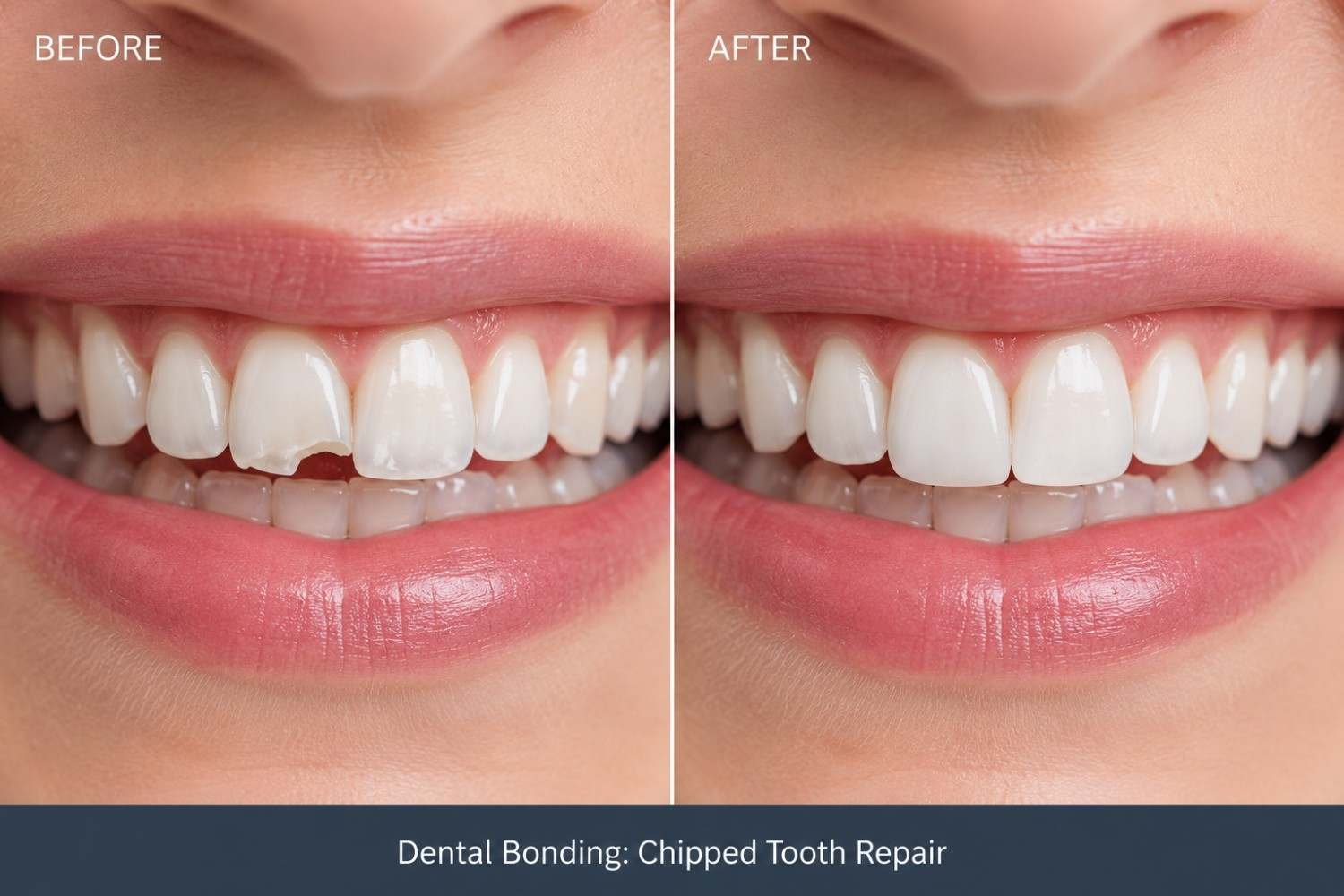
Common before-and-after outcomes include:
- A visibly closed gap between front teeth
- A chipped edge rebuilt to look seamless with the rest of the tooth
- A discolored tooth matching the shade of its neighbors
- A more even, symmetrical smile line
Because the resin is color-matched and hand-shaped, results look natural rather than obviously “worked on.”
Tip: When researching a dentist, ask to see their own before-and-after gallery rather than stock photos — shade-matching skill varies a lot between practices.
How Much Does Dental Bonding Cost?
| Scope | Typical Cost |
|---|---|
| Minor chip repair (1 tooth) | $100–$400 |
| Standard cosmetic bonding (1 tooth) | $300–$600 |
| Multiple teeth / full smile bonding | $1,000–$3,000+ |
What Affects the Cost
- Geographic location — dental costs run higher in major metro areas
- Dentist’s experience level — cosmetic specialists often charge more
- Number of teeth treated
- Complexity — a small chip costs far less than reshaping several teeth
Is Dental Bonding Covered by Insurance?
Insurance usually covers bonding only when it’s medically necessary — for example, repairing a tooth damaged by decay or trauma. Purely cosmetic bonding, like closing a gap for aesthetic reasons, is typically not covered. For a full breakdown, see our dental insurance coverage guide.
Dental Bonding vs. Veneers vs. Crowns
| Feature | Bonding | Veneers | Crowns |
|---|---|---|---|
| Cost per tooth | $300–$600 | $900–$2,500 | $800–$3,000 |
| Visits required | 1 | 2+ | 1–2 |
| Tooth reduction | Minimal/none | Slight | Significant |
| Durability | 4–8 years | 10–15 years | 10–15+ years |
| Stain resistance | Lower | High | High |
| Best for | Small fixes, gaps, chips | Full cosmetic makeover | Damaged/weak teeth |
When Bonding Makes More Sense
Bonding is the better fit for minor, isolated issues — a single chipped tooth, a small gap, or slight discoloration — especially for patients who want a lower-cost, reversible option.
When to Consider Veneers Instead
Veneers make more sense for patients wanting a complete smile makeover across multiple teeth. Compare costs in depth in our veneers vs. bonding cost breakdown.
How Long Does Dental Bonding Last?
Signs It’s Time for a Touch-Up
- Visible discoloration or staining around the bonded area
- Rough edges or chipping
- The bonding feels loose or separated from the tooth
Pros and Cons of Dental Bonding
Pros
- Affordable compared to veneers and crowns
- Usually completed in a single visit
- Minimal to no enamel removed
- Reversible
Cons
- Less durable than veneers or crowns
- More prone to staining over time
- Can chip on hard foods or objects
Am I a Good Candidate for Dental Bonding?
- Have one or two teeth with minor cosmetic issues, not widespread damage
- Want a same-day, budget-friendly fix
- Have good overall oral health and no active gum disease
- Don’t grind their teeth heavily (or are willing to wear a night guard)
Patients with extensive damage, multiple teeth needing correction, or a history of heavy grinding are usually better candidates for veneers or crowns — a dentist can confirm which option fits best during a consultation.
Dental Bonding Aftercare Tips
First 48 Hours
- Avoid biting into very hard foods (ice, hard candy, raw carrots) with the bonded tooth
- Skip heavily pigmented foods and drinks like coffee, tea, and red wine while the resin fully sets
- Avoid smoking, which can stain the resin early
Long-Term Care
- Brush twice daily and floss as usual — see our daily oral hygiene routine guide
- Avoid using teeth as tools to open packaging
- Wear a night guard if grinding or clenching is a habit
- Get professional cleanings every six months
How to Find a Qualified Dentist Near You
- Ask to see the dentist’s own before-and-after cases, not stock photography
- Check reviews specifically mentioning cosmetic bonding, not just general dentistry
- Ask how many years of experience they have with composite shade-matching
- Book a consultation to discuss cost and expected results before committing
Frequently Asked Questions
What is dental bonding?
Dental bonding is a cosmetic dental procedure that uses tooth-colored composite resin to repair chips, close gaps, or cover stains, typically completed in one office visit.
How much is dental bonding?
Dental bonding generally costs between $300 and $600 per tooth, though simple repairs can be as low as $100 and complex or multi-tooth cases can exceed $1,000.
How long does dental bonding last?
Dental bonding typically lasts 4 to 8 years before needing a touch-up, depending on oral habits and maintenance.
Is dental bonding better than veneers?
Bonding is better for minor, isolated fixes and a lower budget, while veneers suit a full smile makeover and longer-lasting results. The right choice depends on the extent of the issue and budget.
Does insurance cover dental bonding?
Insurance usually covers bonding only when it repairs damage from decay or injury. Purely cosmetic bonding is typically an out-of-pocket cost — see our insurance coverage guide for details.
Conclusion
Dental bonding remains one of the fastest, most affordable ways to fix a chipped, gapped, or discolored tooth without committing to the cost or invasiveness of veneers or crowns. In a single visit, most patients walk out with a natural-looking repair that can last 4 to 8 years with reasonable care.
It isn’t right for every situation — extensive damage or multiple teeth needing correction usually call for veneers or crowns instead — but for the chip, gap, or stain that’s been bothering someone, bonding is often the simplest solution available.
All prices are general U.S. market estimates for planning purposes — actual cost depends on the dentist, location, and case complexity. This article is for general informational purposes and isn’t a substitute for advice from a licensed dentist.