Pediatric & General Dentistry Guide
Shark Teeth in Humans: What the “Shark Teeth” Condition Really Means
A complete guide to the shark teeth human condition — why it happens in kids, how it compares to real shark teeth, and what to do about it.
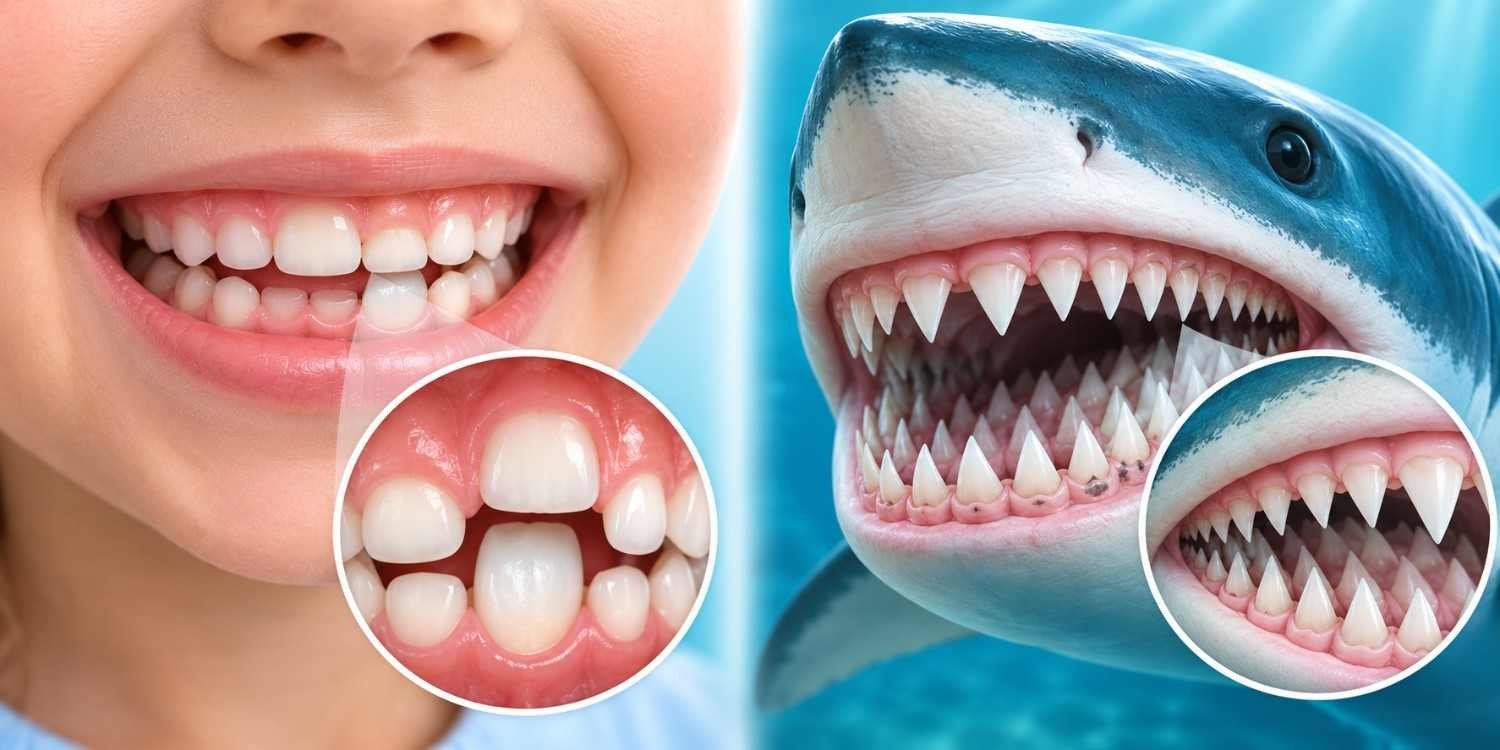
If your child suddenly has two rows of teeth — a wobbly baby tooth in front and a new permanent tooth poking up right behind it — you may have heard a dentist casually call it “shark teeth.” It looks alarming, but it’s actually one of the most common things pediatric dentists see in the dental chair.
The term shark teeth human refers to this double row of teeth in a child’s mouth, named because it resembles how real sharks constantly grow new rows of teeth behind their existing ones. But unlike sharks, humans aren’t built to keep replacing teeth over and over — so this condition needs a slightly different explanation, and sometimes, a trip to the dentist.
In this guide, we’ll break down exactly what the shark teeth human condition is, why it happens, how it’s treated, and how real shark teeth compare biologically to human teeth. We’ll also answer the most common questions parents search for on Google.
Quick answer: “Shark teeth” in humans is not a disease — it’s a normal (though slightly early or delayed) part of losing baby teeth, where a permanent tooth erupts behind a baby tooth that hasn’t fallen out yet. Most cases resolve on their own within a few weeks to months.
What Is the “Shark Teeth” Condition in Humans?
In dentistry, “shark teeth” is an informal nickname — not an official medical term — for a very specific situation: a permanent tooth erupts behind a baby (primary) tooth that hasn’t fallen out yet. For a while, the child has two rows of teeth in that area, just like the multiple rows seen in a shark’s jaw.
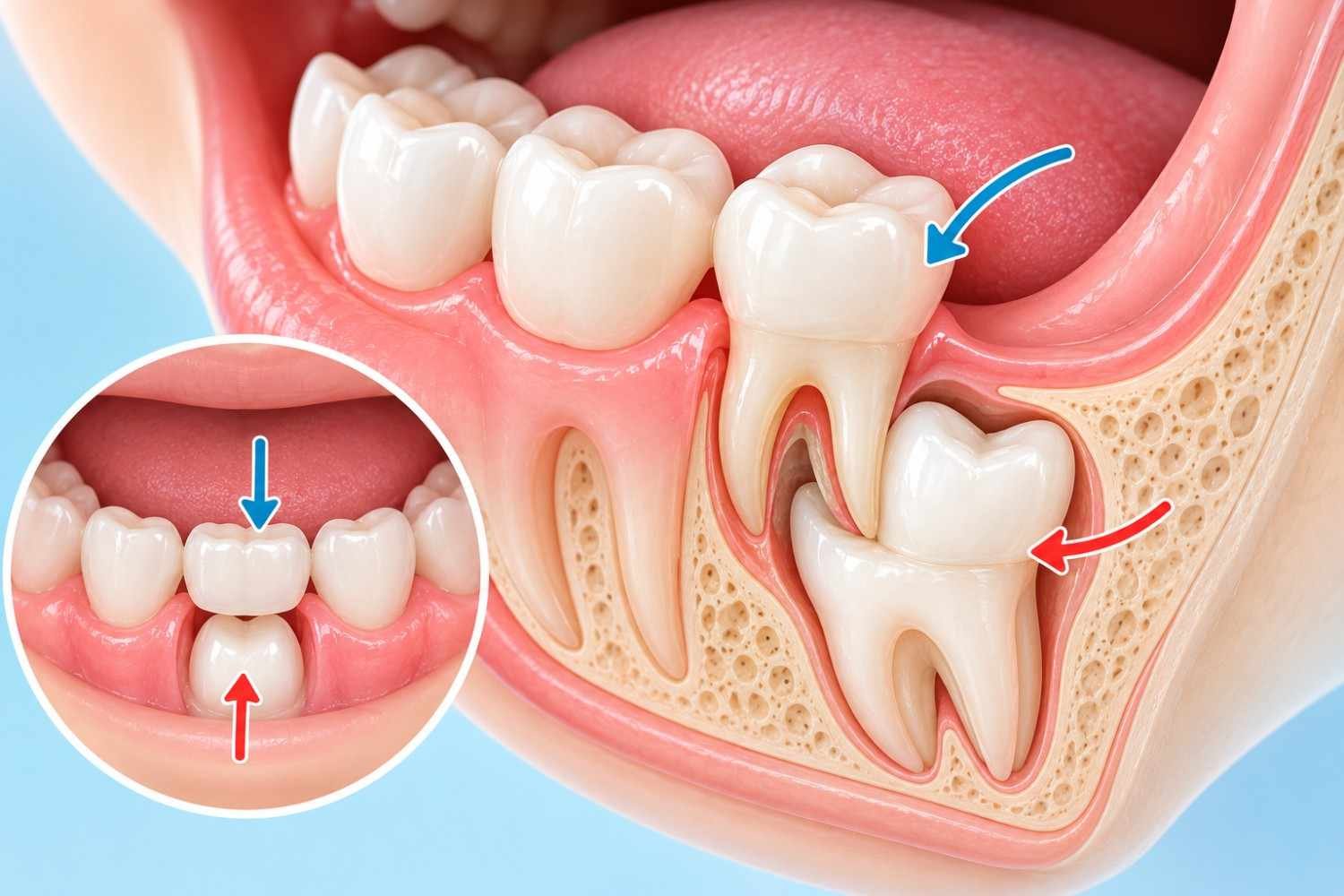
This usually happens with the lower front teeth around ages 5 to 7, when permanent incisors are the first adult teeth to come in. Instead of dissolving the roots of the baby tooth above it and pushing it out, the new tooth sometimes erupts slightly behind, creating the “double row” look.
Is It the Same as “Shark Teeth” in Anime or Pop Culture?
Not quite. The pointed, exaggerated “shark teeth” look sometimes drawn on anime or cartoon characters (sharp, jagged canines) is a stylistic choice, unrelated to this clinical condition. In real dental terms, “shark teeth” always refers to the double-row eruption pattern described above.
Why Does Shark Teeth Happen? (Causes & Genetics)
Every baby tooth has a permanent tooth developing beneath it. Normally, as the permanent tooth pushes upward, it slowly dissolves the root of the baby tooth above it — a process called resorption. Once enough of the root is gone, the baby tooth becomes loose and falls out, leaving a clear path for the adult tooth.
The shark teeth pattern happens when this timing is off. Common causes include:
- Incomplete root resorption — the permanent tooth erupts before the baby tooth’s root has fully dissolved.
- Genetics — some children are simply more prone to this eruption pattern; it can run in families.
- Crowded jaws — a smaller jaw can push the permanent tooth to find a path of least resistance, often behind the baby tooth.
- Early or late tooth loss — losing a baby tooth too early or too late can throw off the normal eruption sequence.
Genetics plays a real role here — pediatric dentists often note that if one child in a family experienced this, siblings may too. It isn’t caused by anything a parent did wrong, and it isn’t linked to diet, hygiene, or injury in most cases.
Shark Teeth in Kids vs. Shark Teeth in Adults
The classic shark teeth human condition is almost exclusively a childhood issue, tied to the natural transition from baby teeth to permanent teeth. But the term does come up in a couple of adult contexts too:
| Scenario | Who It Affects | Typical Cause |
|---|---|---|
| Classic “shark teeth” | Children, ages 5–7 (sometimes up to 12) | Baby tooth root hasn’t resorbed yet |
| Retained baby tooth in adults | Teens/adults (rare) | Missing or impacted permanent tooth never pushed the baby tooth out |
| Supernumerary (extra) teeth | Any age | Extra tooth buds forming beyond the normal set |
A shark teeth human adult case is uncommon and usually means a baby tooth was simply never lost — often because the permanent tooth underneath is missing, misaligned, or impacted. This is worth evaluating by a dentist, since retained baby teeth in adulthood can affect bite and long-term oral health.
Human Teeth vs. Real Shark Teeth: Key Differences
It’s worth understanding why the “shark teeth” nickname exists in the first place — because biologically, human and shark teeth work in very different ways.
| Feature | Human Teeth | Shark Teeth |
|---|---|---|
| Number of sets in a lifetime | Two (baby teeth, then permanent teeth) | Continuous — thousands over a lifetime |
| Replacement style | One tooth replaces one tooth, once | Rows of teeth constantly move forward to replace worn ones |
| Attachment to jaw | Anchored by roots in a socket (via the periodontal ligament) | Attached loosely to skin-like tissue, not deep roots |
| Hardness | Enamel is the hardest substance in the human body | Enameloid coating, harder in some ways than human enamel but structured differently |
| Purpose of “double rows” | Temporary overlap during the transition from baby to adult teeth | Permanent design — multiple rows are always in reserve |
Interestingly, research on tooth hardness has shown that human tooth enamel and shark tooth enameloid are structured in surprisingly similar crystalline patterns at a microscopic level — one reason scientists studying tooth resilience sometimes compare the two directly. But functionally, the two systems are worlds apart: a shark can lose and regrow teeth its whole life, while humans get essentially one shot at their permanent set.
Signs & Symptoms to Watch For
Most cases of shark teeth in a child’s mouth are painless and easy to spot. Common signs include:
- A new, sharp-edged tooth visible directly behind a baby tooth
- The baby tooth still feels fairly firm, not very wobbly
- Mild gum tenderness or minor swelling in the area
- Slight difficulty chewing on that side
- No visible gap where a baby tooth was expected to fall out first
If your child isn’t complaining of pain and the baby tooth is at least a little loose, it’s generally safe to monitor at home for a couple of weeks before calling the dentist.
Treatment & Removal Options
Treatment for shark teeth human removal depends entirely on how loose the baby tooth is and how much time has passed.
1. Watch and Wait (Most Common)
In the majority of cases, the tongue and normal chewing pressure from the new permanent tooth will gradually loosen the baby tooth, and it falls out naturally within 1 to 3 months. Once it’s gone, the permanent tooth typically shifts forward into the correct position on its own within about six months.
2. Dentist-Assisted Extraction
If the baby tooth hasn’t loosened after several months, or if it’s causing pain, crowding, or bite problems, a pediatric dentist may recommend a quick, simple extraction. This is a routine, low-discomfort procedure often done with just local numbing.
3. Orthodontic Monitoring
In some children, especially those with a naturally small jaw, a dentist may recommend keeping an eye on spacing over time to see if orthodontic treatment (like a space maintainer or braces) will eventually be needed.
When to call a dentist sooner: if the baby tooth shows no signs of loosening after 6–8 weeks, if your child is in real pain, or if you notice more than one extra row of teeth developing at once.
Home Care Tips While You Wait
- Encourage tongue movement: gently wiggling the baby tooth with a clean finger or the tongue can help speed up natural loosening.
- Offer crunchy foods: apples, carrots, and similar foods add gentle pressure that can help the tooth loosen.
- Keep up regular brushing: the double row of teeth can trap more plaque, so brush both rows gently twice a day.
- Avoid forcing it out: pulling a baby tooth before it’s ready can cause bleeding or damage to the gum and new tooth underneath.
- Track the timeline: if you’re unsure whether it’s improving, take a quick photo each week to compare progress.
Frequently Asked Questions
Is shark teeth in children dangerous?
No. It’s a common, usually harmless stage in the transition from baby teeth to permanent teeth. It typically resolves on its own within a few weeks to a few months.
At what age does shark teeth usually happen?
It’s most common between ages 5 and 7, when the lower front permanent teeth first erupt, though it can occur with other teeth up to around age 12.
Do I need to pull the baby tooth myself?
It’s best not to force it. Gentle encouragement (wiggling, crunchy foods) is fine, but forcibly removing a baby tooth before it’s ready can damage the gum tissue or the emerging permanent tooth.
Can shark teeth happen to adults?
Rarely. In adults, a retained baby tooth is usually the result of a missing, impacted, or misaligned permanent tooth beneath it and should be evaluated by a dentist.
Is the “shark teeth” condition genetic?
There’s a genetic tendency in some families toward slower baby-tooth root resorption or smaller jaw size, both of which can make this eruption pattern more likely.
Conclusion
The “shark teeth” nickname might sound intimidating, but for the vast majority of children, it’s simply a normal — if slightly early — bump in the road toward a full set of permanent teeth. It happens when a new adult tooth erupts before the baby tooth above it has had time to loosen, and it almost always resolves naturally within a few months.
While real sharks are built to regrow rows of teeth their entire lives, humans get one true set of permanent teeth — which is exactly why keeping an eye on eruption patterns, practicing good home care, and knowing when to call a pediatric dentist matters. If a baby tooth hasn’t budged after 6–8 weeks, or your child is in pain, a quick dental visit can resolve it safely and simply.
Related Reading on Zirconia Bridge